
CONTACT US
SEARCH WHAT YOU WANT
Sustainable manufacturing has transitioned from a corporate social responsibility (CSR) trend to a core operational requirement. For facility managers and OEM project leads, the challenge lies in maintaining high cleanliness standards while adhering to Environmental, Social, and Governance (ESG) mandates. Traditional floor maintenance, specifically manual sweeping, is increasingly viewed as an inefficiency trap that hinders these sustainability goals.
The emergence of waterless cleaning technology, embodied by autonomous systems, offers a strategic alternative. By analyzing an industrial dry cleaning robot vs. manual sweeping, manufacturers can identify significant opportunities for resource conservation, labor optimization, and enhanced particulate control in sensitive production environments.
Water consumption in industrial facilities is under intense scrutiny. Traditional wet cleaning methods not only consume thousands of gallons of water annually but also create slip-and-fall hazards and potential moisture-related damage to sensitive machinery.
Waterless cleaning technology utilizes high-efficiency vacuum systems and precision brush mechanics to remove debris without the need for liquid agents. This is particularly critical in electronics assembly, battery manufacturing, and textile production, where humidity control and moisture exclusion are non-negotiable. By eliminating water from the cleaning cycle, facilities directly contribute to water scarcity mitigation and reduce the chemical runoff associated with industrial detergents.
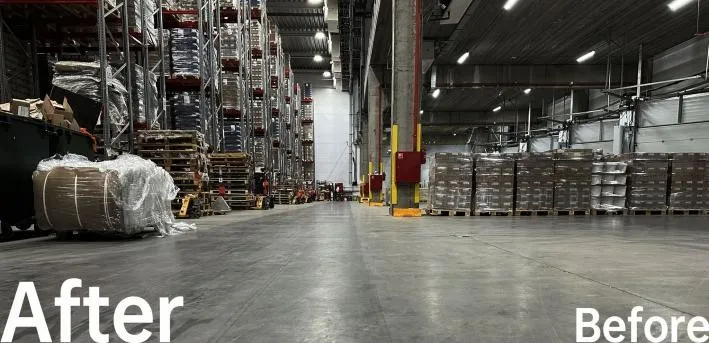
When evaluating floor maintenance strategies, stakeholders must look beyond the initial purchase price and analyze long-term operational impact. Manual sweeping often appears cost-effective on a balance sheet but carries hidden liabilities in terms of consistency and environmental quality.
Manual sweeping often redistributes fine dust into the air, which eventually settles back onto high-precision machinery or finished goods. In contrast, industrial dry cleaning robots utilize internal filtration systems. For instance, advanced units like the Aoting SW55-A are designed to capture dust at the source, preventing it from becoming airborne. This protects both sensitive production equipment and the respiratory health of the workforce.
The efficiency of a waterless cleaning system is determined by its navigation intelligence. Modern robots utilize SLAM (Simultaneous Localization and Mapping) to navigate complex factory floors autonomously.
Manual sweeping is inherently non-linear. Workers may skip areas or overlap unnecessarily, wasting energy and time. An autonomous system calculates the most efficient route, minimizing "empty miles" and reducing battery consumption. In large-scale logistics and manufacturing, where floor areas exceed 50,000 square feet, the energy efficiency gained through intelligent pathing directly impacts a facility's carbon footprint.
The Aoting SW55-A exemplifies this by offering high-precision navigation that adapts to changing floor layouts. Its ability to operate continuously for up to 5 hours ensures that even the largest facilities can maintain cleanliness without human intervention, allowing staff to be redeployed to higher-value manufacturing tasks.
Not all manufacturing environments are equal. The decision to switch from manual sweeping to an industrial dry cleaning robot is often driven by the specific needs of the industry.
1. Electronics and Semiconductor Manufacturing
In these environments, static electricity and moisture are critical threats. Waterless robots prevent the introduction of humidity into the cleanroom-adjacent areas while effectively managing the microscopic dust that can compromise wafer integrity.
2. Textile and Paper Mills
Fine lint and fiber debris are combustible hazards. Manual sweeping often fails to capture these light materials effectively. A vacuum-based autonomous system provides superior removal and containment, enhancing fire safety protocols.
3. Logistics and Cold Storage
In cold storage, water-based cleaning is impossible due to freezing risks. Manual sweeping in these areas is physically demanding for workers. Dry cleaning robots provide a reliable, water-free solution that operates efficiently in low-temperature environments.
For procurement managers, the transition to autonomous technology is a financial calculation. While the CAPEX of an industrial dry cleaning robot is higher than a set of brooms, the ROI is usually realized within 12 to 18 months through labor savings alone.
Beyond labor, consider the following cost drivers:
Reduced Equipment Downtime: Cleaner floors mean less dust enters the cooling fans and sensitive components of production machinery.
Insurance and Liability: Lowering slip-and-fall risks (by eliminating water) can lead to improved safety ratings and lower insurance premiums.
ESG Compliance: Automated reporting provides the verifiable data required for sustainability audits and LEED certifications.

Can an industrial dry cleaning robot handle large debris?
Most professional-grade robots, such as the SW55-A, are optimized for fine dust, metal shavings, and small warehouse debris (like wood splinters or plastic scraps). Extremely large debris may still require a manual pre-check, but the robot handles 95% of standard floor maintenance.
How does waterless technology impact floor longevity?
Traditional scrubbing with harsh chemicals can degrade floor coatings over time. Dry cleaning uses mechanical action and suction, which is significantly gentler on epoxy and polished concrete surfaces, extending the lifespan of the facility's infrastructure.
What is the maintenance requirement for a dry cleaning robot?
Maintenance typically involves emptying the dustbin, cleaning the brushes, and ensuring the sensors are clear of obstructions. These tasks usually take less than 10 minutes per day, a fraction of the time required for manual cleaning management.
Is autonomous cleaning safe in a high-traffic factory?
Yes. Modern robots are equipped with LiDAR and ultrasonic sensors that allow them to detect and avoid both stationary and moving obstacles, including forklifts and personnel, ensuring seamless integration into active production environments.
Can industrial cleaning robots work in factories and warehouses?
Yes. Industrial cleaning robots are designed for large environments such as factories, warehouses, logistics centers, and commercial facilities.
What factors should I consider when choosing a cleaning robot?
Key factors include cleaning capacity, navigation technology, battery life, floor compatibility, maintenance, and supplier support.
How do I choose a reliable industrial cleaning robot supplier?
Evaluate the supplier’s manufacturing capability, technical expertise, product reliability, and after-sales service.
ISO 14001:2015 – Environmental management systems requirements.
MHI (Material Handling Institute) – Reports on automation in the warehouse and logistics sector.
LEED v4.1 for Operations and Maintenance – Guidelines for green cleaning and indoor environmental quality.
SGS Sustainability Services – Technical whitepapers on industrial water conservation.
IEEE Robotics and Automation Society – Research on SLAM navigation efficiency in industrial settings.
Sustainable manufacturing has transitioned from a corporate social responsibility (CSR) trend to a core operational requirement. For facility managers and OEM project leads, the challenge lies in maintaining high cleanliness standards while adhering to Environmental, Social, and Governance (ESG) mandates. Traditional floor maintenance, specifically manual sweeping, is increasingly viewed as an inefficiency trap that hinders these sustainability goals.
The emergence of waterless cleaning technology, embodied by autonomous systems, offers a strategic alternative. By analyzing an industrial dry cleaning robot vs. manual sweeping, manufacturers can identify significant opportunities for resource conservation, labor optimization, and enhanced particulate control in sensitive production environments.
Water consumption in industrial facilities is under intense scrutiny. Traditional wet cleaning methods not only consume thousands of gallons of water annually but also create slip-and-fall hazards and potential moisture-related damage to sensitive machinery.
Waterless cleaning technology utilizes high-efficiency vacuum systems and precision brush mechanics to remove debris without the need for liquid agents. This is particularly critical in electronics assembly, battery manufacturing, and textile production, where humidity control and moisture exclusion are non-negotiable. By eliminating water from the cleaning cycle, facilities directly contribute to water scarcity mitigation and reduce the chemical runoff associated with industrial detergents.
When evaluating floor maintenance strategies, stakeholders must look beyond the initial purchase price and analyze long-term operational impact. Manual sweeping often appears cost-effective on a balance sheet but carries hidden liabilities in terms of consistency and environmental quality.
Manual sweeping often redistributes fine dust into the air, which eventually settles back onto high-precision machinery or finished goods. In contrast, industrial dry cleaning robots utilize internal filtration systems. For instance, advanced units like the Aoting SW55-A are designed to capture dust at the source, preventing it from becoming airborne. This protects both sensitive production equipment and the respiratory health of the workforce.
The efficiency of a waterless cleaning system is determined by its navigation intelligence. Modern robots utilize SLAM (Simultaneous Localization and Mapping) to navigate complex factory floors autonomously.
Manual sweeping is inherently non-linear. Workers may skip areas or overlap unnecessarily, wasting energy and time. An autonomous system calculates the most efficient route, minimizing "empty miles" and reducing battery consumption. In large-scale logistics and manufacturing, where floor areas exceed 50,000 square feet, the energy efficiency gained through intelligent pathing directly impacts a facility's carbon footprint.
The Aoting SW55-A exemplifies this by offering high-precision navigation that adapts to changing floor layouts. Its ability to operate continuously for up to 5 hours ensures that even the largest facilities can maintain cleanliness without human intervention, allowing staff to be redeployed to higher-value manufacturing tasks.
Not all manufacturing environments are equal. The decision to switch from manual sweeping to an industrial dry cleaning robot is often driven by the specific needs of the industry.
1. Electronics and Semiconductor Manufacturing
In these environments, static electricity and moisture are critical threats. Waterless robots prevent the introduction of humidity into the cleanroom-adjacent areas while effectively managing the microscopic dust that can compromise wafer integrity.
2. Textile and Paper Mills
Fine lint and fiber debris are combustible hazards. Manual sweeping often fails to capture these light materials effectively. A vacuum-based autonomous system provides superior removal and containment, enhancing fire safety protocols.
3. Logistics and Cold Storage
In cold storage, water-based cleaning is impossible due to freezing risks. Manual sweeping in these areas is physically demanding for workers. Dry cleaning robots provide a reliable, water-free solution that operates efficiently in low-temperature environments.
For procurement managers, the transition to autonomous technology is a financial calculation. While the CAPEX of an industrial dry cleaning robot is higher than a set of brooms, the ROI is usually realized within 12 to 18 months through labor savings alone.
Beyond labor, consider the following cost drivers:
Reduced Equipment Downtime: Cleaner floors mean less dust enters the cooling fans and sensitive components of production machinery.
Insurance and Liability: Lowering slip-and-fall risks (by eliminating water) can lead to improved safety ratings and lower insurance premiums.
ESG Compliance: Automated reporting provides the verifiable data required for sustainability audits and LEED certifications.
Can an industrial dry cleaning robot handle large debris?
Most professional-grade robots, such as the SW55-A, are optimized for fine dust, metal shavings, and small warehouse debris (like wood splinters or plastic scraps). Extremely large debris may still require a manual pre-check, but the robot handles 95% of standard floor maintenance.
How does waterless technology impact floor longevity?
Traditional scrubbing with harsh chemicals can degrade floor coatings over time. Dry cleaning uses mechanical action and suction, which is significantly gentler on epoxy and polished concrete surfaces, extending the lifespan of the facility's infrastructure.
What is the maintenance requirement for a dry cleaning robot?
Maintenance typically involves emptying the dustbin, cleaning the brushes, and ensuring the sensors are clear of obstructions. These tasks usually take less than 10 minutes per day, a fraction of the time required for manual cleaning management.
Is autonomous cleaning safe in a high-traffic factory?
Yes. Modern robots are equipped with LiDAR and ultrasonic sensors that allow them to detect and avoid both stationary and moving obstacles, including forklifts and personnel, ensuring seamless integration into active production environments.
Can industrial cleaning robots work in factories and warehouses?
Yes. Industrial cleaning robots are designed for large environments such as factories, warehouses, logistics centers, and commercial facilities.
What factors should I consider when choosing a cleaning robot?
Key factors include cleaning capacity, navigation technology, battery life, floor compatibility, maintenance, and supplier support.
How do I choose a reliable industrial cleaning robot supplier?
Evaluate the supplier’s manufacturing capability, technical expertise, product reliability, and after-sales service.
ISO 14001:2015 – Environmental management systems requirements.
MHI (Material Handling Institute) – Reports on automation in the warehouse and logistics sector.
LEED v4.1 for Operations and Maintenance – Guidelines for green cleaning and indoor environmental quality.
SGS Sustainability Services – Technical whitepapers on industrial water conservation.
IEEE Robotics and Automation Society – Research on SLAM navigation efficiency in industrial settings.
CONTACT US
we aim to become a global leader in manufacturer space service robotics and artificial intelligence.


