
CONTACT US
SEARCH WHAT YOU WANT
In the high-cadence environment of a modern logistics center, floor maintenance is often an overlooked operational bottleneck. For facility managers and 3PL (Third-Party Logistics) directors, traditional manual cleaning methods struggle to keep pace with 24/7 shipping cycles and massive square footage. A logistics center cleaning robot represents a shift from reactive janitorial labor to proactive, data-driven facility management.
From an engineering perspective, these autonomous systems are not merely "vacuums" but sophisticated mobile robots (AMRs) designed to navigate dynamic environments. They must safely traverse aisles occupied by forklifts, AGVs, and human workers while maintaining high hygiene standards required for food-grade or electronics storage.
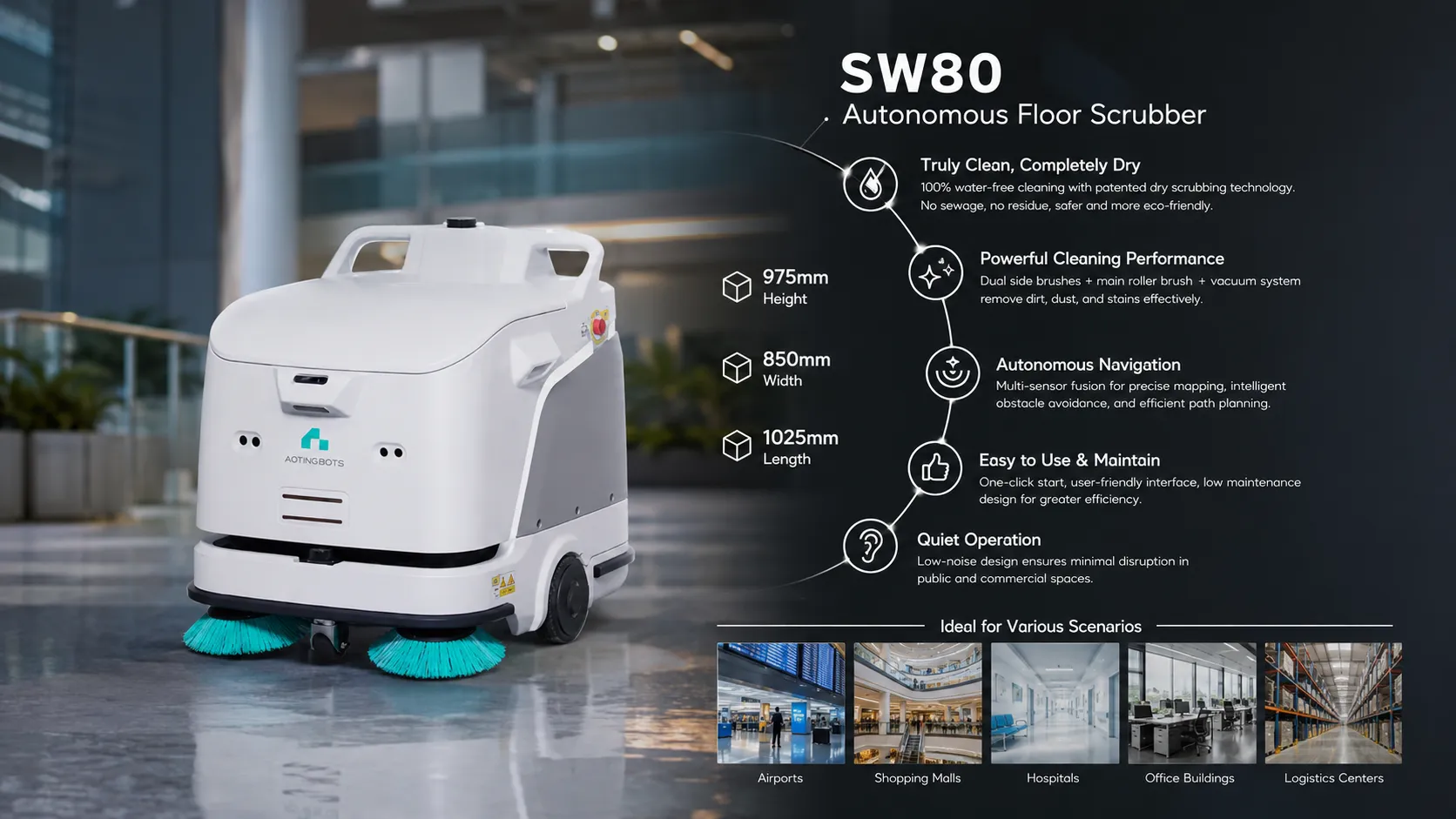
The effectiveness of a logistics center cleaning robot is dictated by its navigation stack and sensor suite. Unlike consumer-grade robotics, industrial units rely on Simultaneous Localization and Mapping (SLAM) technology. This allows the robot to build a map of the warehouse in real-time and navigate without the need for magnetic strips or beacons.
Key technical components typically include:
LiDAR (Light Detection and Ranging): For 360-degree environmental scanning and obstacle detection.
3D ToF (Time of Flight) Cameras: To distinguish between a static pallet and a moving human.
Ultrasonic Sensors: For detecting glass or highly reflective surfaces that LiDAR might miss.
Automatic Charging & Docking: Essential for "lights-out" operations where the robot manages its own power cycles.
For procurement managers, the transition to robotics is usually justified through a comparative ROI analysis. In large-scale operations, the "cost per square meter" drops significantly when labor is redirected to higher-value tasks.
Not every logistics center cleaning robot is suited for every facility. The choice of hardware depends on the flooring material and the specific debris profile.
E-commerce Hubs: High dust and cardboard fiber accumulation require high-suction vacuuming and frequent filter cleaning.
3PL Warehouses: Diverse goods mean the robot must handle varied aisle widths and high-traffic crossroads.
Cold Storage: Requires specialized battery management and sensor heating to prevent condensation and performance degradation in sub-zero temperatures.
Logistics managers seeking integrated systems often look for comprehensive cleaning solutions that can be managed via a centralized fleet management system. This allows a single operator to oversee multiple robots across a 100,000-square-meter facility, dramatically increasing the "labor-to-m2" efficiency ratio.
When evaluating a logistics center cleaning robot, B2B buyers must look beyond the initial CAPEX (Capital Expenditure). The total cost of ownership (TCO) includes battery life cycles, brush replacement costs, and software subscription fees for cloud analytics.
Labor Redistribution: Facilities can move cleaning staff to "detailing" or specialized sanitization, areas where robots are less effective.
Reduced Equipment Damage: Autonomous robots follow precise paths, reducing the accidental impacts on racking or product common with fatigued human operators.
Proof of Clean: Digital reports provide a timestamped audit trail, which is critical for facilities maintaining ISO or food safety certifications.
In large-volume production and distribution, sampling or pilot programs are common. Implementing a single unit in a high-traffic zone allows engineers to measure the robot's ability to handle the specific "dust load" of the facility before committing to a full-fleet rollout.
How does the robot handle forklift traffic?
Industrial robots utilize active obstacle avoidance. When the LiDAR sensors detect a forklift, the robot can either pause its path or calculate a real-time detour to avoid disrupting the logistics flow.
What floor types are compatible?
Most logistics center cleaning robots are optimized for hard surfaces like polished concrete, epoxy-coated floors, and industrial tiling. They are generally not designed for carpeted areas.
What is the typical battery runtime?
High-capacity Lithium-ion batteries typically provide 4 to 6 hours of continuous scrubbing. With autonomous docking, the robot can recharge during downtime and resume its task without human intervention.
Is specialized training required for staff?
While the robot is autonomous, a 1-2 day training session is usually required for site managers to learn how to set cleaning zones, interpret data reports, and perform basic daily maintenance like emptying the recovery tank.
Can it clean in Very Narrow Aisles (VNA)?
Yes, specific models are designed with a tight turning radius and slim profile to operate in VNA environments, provided the aisle width exceeds the robot's footprint by a safety margin (typically 10-15cm).
ISO 13482:2014: Safety requirements for personal care robots (including mobile service robots).
ASTM F45: New standards for evaluating the performance of automated floor cleaning robots. ASTM.org
IEEE Robotics and Automation Society: Technical papers on SLAM and autonomous navigation in industrial zones. IEEE.org
SGS/UL Certifications: For electrical safety and battery management in autonomous hardware.
OSHA Floor Safety Guidelines: Requirements for maintaining dry and clean walking surfaces in industrial facilities. OSHA.gov
In the high-cadence environment of a modern logistics center, floor maintenance is often an overlooked operational bottleneck. For facility managers and 3PL (Third-Party Logistics) directors, traditional manual cleaning methods struggle to keep pace with 24/7 shipping cycles and massive square footage. A logistics center cleaning robot represents a shift from reactive janitorial labor to proactive, data-driven facility management.
From an engineering perspective, these autonomous systems are not merely "vacuums" but sophisticated mobile robots (AMRs) designed to navigate dynamic environments. They must safely traverse aisles occupied by forklifts, AGVs, and human workers while maintaining high hygiene standards required for food-grade or electronics storage.
The effectiveness of a logistics center cleaning robot is dictated by its navigation stack and sensor suite. Unlike consumer-grade robotics, industrial units rely on Simultaneous Localization and Mapping (SLAM) technology. This allows the robot to build a map of the warehouse in real-time and navigate without the need for magnetic strips or beacons.
Key technical components typically include:
LiDAR (Light Detection and Ranging): For 360-degree environmental scanning and obstacle detection.
3D ToF (Time of Flight) Cameras: To distinguish between a static pallet and a moving human.
Ultrasonic Sensors: For detecting glass or highly reflective surfaces that LiDAR might miss.
Automatic Charging & Docking: Essential for "lights-out" operations where the robot manages its own power cycles.
For procurement managers, the transition to robotics is usually justified through a comparative ROI analysis. In large-scale operations, the "cost per square meter" drops significantly when labor is redirected to higher-value tasks.
Not every logistics center cleaning robot is suited for every facility. The choice of hardware depends on the flooring material and the specific debris profile.
E-commerce Hubs: High dust and cardboard fiber accumulation require high-suction vacuuming and frequent filter cleaning.
3PL Warehouses: Diverse goods mean the robot must handle varied aisle widths and high-traffic crossroads.
Cold Storage: Requires specialized battery management and sensor heating to prevent condensation and performance degradation in sub-zero temperatures.
Logistics managers seeking integrated systems often look for comprehensive cleaning solutions that can be managed via a centralized fleet management system. This allows a single operator to oversee multiple robots across a 100,000-square-meter facility, dramatically increasing the "labor-to-m2" efficiency ratio.
When evaluating a logistics center cleaning robot, B2B buyers must look beyond the initial CAPEX (Capital Expenditure). The total cost of ownership (TCO) includes battery life cycles, brush replacement costs, and software subscription fees for cloud analytics.
Labor Redistribution: Facilities can move cleaning staff to "detailing" or specialized sanitization, areas where robots are less effective.
Reduced Equipment Damage: Autonomous robots follow precise paths, reducing the accidental impacts on racking or product common with fatigued human operators.
Proof of Clean: Digital reports provide a timestamped audit trail, which is critical for facilities maintaining ISO or food safety certifications.
In large-volume production and distribution, sampling or pilot programs are common. Implementing a single unit in a high-traffic zone allows engineers to measure the robot's ability to handle the specific "dust load" of the facility before committing to a full-fleet rollout.
How does the robot handle forklift traffic?
Industrial robots utilize active obstacle avoidance. When the LiDAR sensors detect a forklift, the robot can either pause its path or calculate a real-time detour to avoid disrupting the logistics flow.
What floor types are compatible?
Most logistics center cleaning robots are optimized for hard surfaces like polished concrete, epoxy-coated floors, and industrial tiling. They are generally not designed for carpeted areas.
What is the typical battery runtime?
High-capacity Lithium-ion batteries typically provide 4 to 6 hours of continuous scrubbing. With autonomous docking, the robot can recharge during downtime and resume its task without human intervention.
Is specialized training required for staff?
While the robot is autonomous, a 1-2 day training session is usually required for site managers to learn how to set cleaning zones, interpret data reports, and perform basic daily maintenance like emptying the recovery tank.
Can it clean in Very Narrow Aisles (VNA)?
Yes, specific models are designed with a tight turning radius and slim profile to operate in VNA environments, provided the aisle width exceeds the robot's footprint by a safety margin (typically 10-15cm).
ISO 13482:2014: Safety requirements for personal care robots (including mobile service robots).
ASTM F45: New standards for evaluating the performance of automated floor cleaning robots. ASTM.org
IEEE Robotics and Automation Society: Technical papers on SLAM and autonomous navigation in industrial zones. IEEE.org
SGS/UL Certifications: For electrical safety and battery management in autonomous hardware.
OSHA Floor Safety Guidelines: Requirements for maintaining dry and clean walking surfaces in industrial facilities. OSHA.gov
CONTACT US
we aim to become a global leader in manufacturer space service robotics and artificial intelligence.


