
CONTACT US
SEARCH WHAT YOU WANT
Selecting an automated floor cleaning solution for commercial or industrial environments requires looking beyond basic vacuuming capabilities. In high-traffic zones like hospitals, logistics centers, or manufacturing plants, the "features" of a robot translate directly into ROI, safety, and operational uptime. Facility managers must evaluate these machines as integrated assets within a broader maintenance ecosystem rather than standalone gadgets.
The transition from manual cleaning to autonomous systems involves understanding the interplay between sensor hardware, navigation algorithms, and mechanical cleaning efficiency. This guide breaks down the essential technical features that define a high-performance floor cleaning robot.
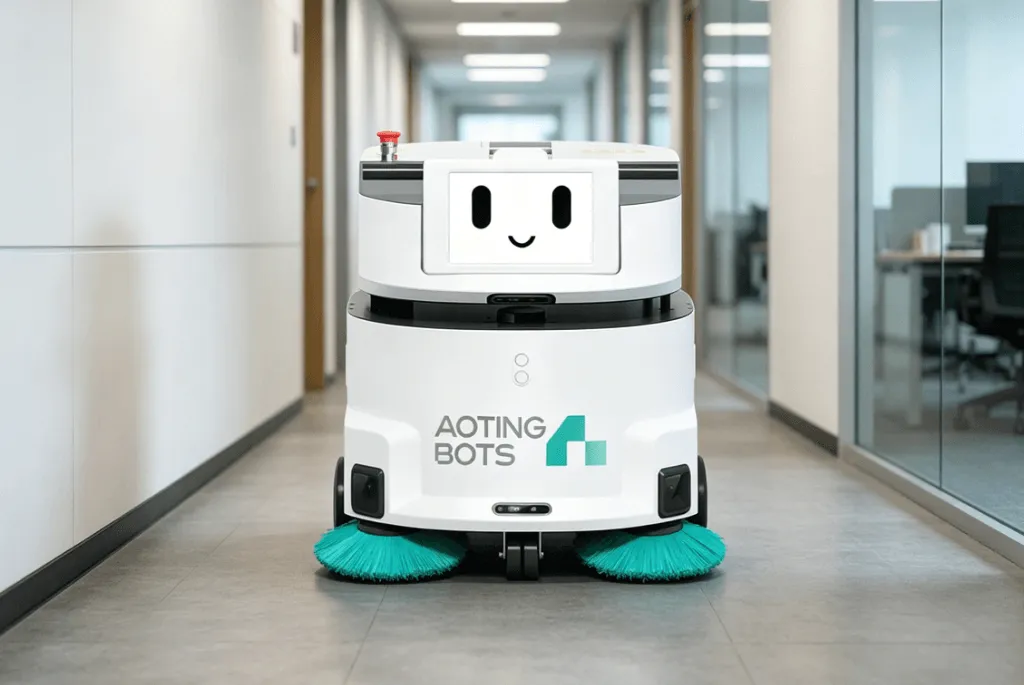
The core of any autonomous cleaner is its ability to perceive and navigate complex environments. For professional settings, standard "bump-and-turn" logic is obsolete. The industry gold standard is SLAM (Simultaneous Localization and Mapping) technology.
Reliable robots utilize a fusion of sensors, typically including LiDAR (Light Detection and Ranging), 3D Depth Cameras, and Ultrasonic sensors. This multi-modal approach ensures the robot can detect low-profile obstacles, glass partitions, and drop-offs (cliffs) even in changing lighting conditions. When evaluating a robot’s mapping capabilities, look for:
Real-time Path Planning: The ability to recalculate routes instantly when a new obstacle—such as a forklift or a display pallet—is placed in its path.
Multi-floor Mapping: Professional-grade systems should store several maps and recognize their location automatically upon deployment.
Localization Accuracy: A deviation of more than a few centimeters can lead to missed spots or collisions with delicate equipment.
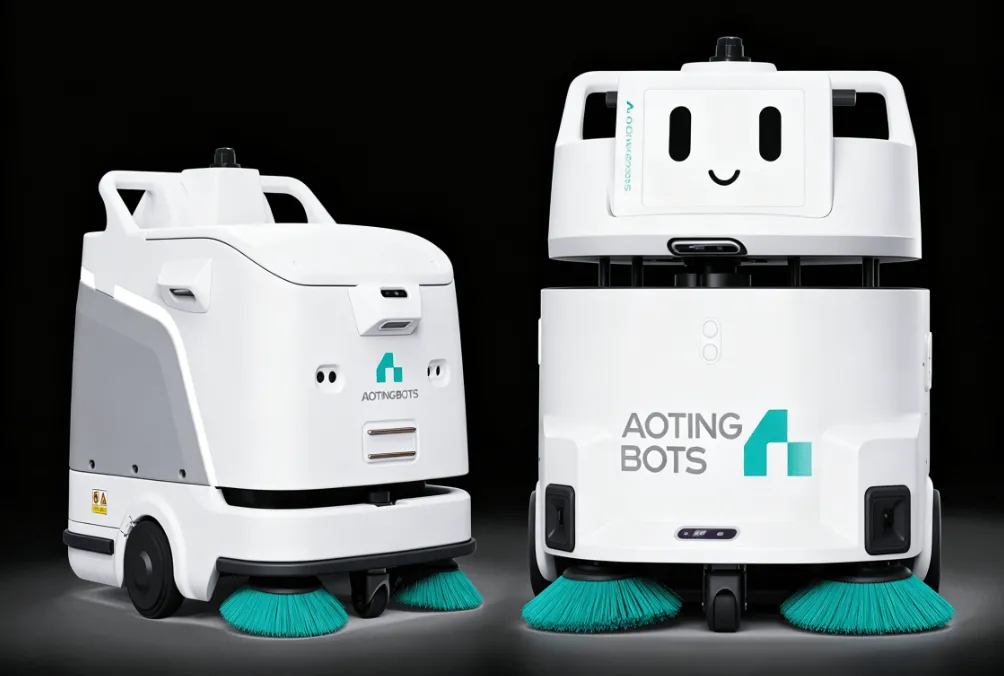
A robot is only as valuable as the cleanliness of the floor it leaves behind. In industrial contexts, the distinction between a "sweeper" and a "scrubber" is vital. High-end models, such as those developed by Aotingbot, often integrate modular cleaning heads to handle diverse debris types.
Key mechanical specifications include:
Down-pressure Control: For stubborn stains on concrete or epoxy floors, adjustable brush pressure (measured in kg) is necessary to ensure deep cleaning without damaging the surface.
Suction Power and Squeegee Performance: Efficient water recovery is a safety requirement. A high-wattage vacuum motor combined with a professional-grade parabolic squeegee ensures the floor is dry immediately after the pass, preventing slip-and-fall accidents.
Dual-purpose Modules: Some advanced systems allow for rapid switching between roller brushes (for textured floors) and disc brushes (for smooth, polished surfaces).
True ROI in automation comes from reducing the "babysitting" time required by staff. Look for features that support Full Autonomy rather than just autonomous movement.
Automated Workstations: High-tier commercial robots utilize docking stations that do more than just charge the battery. They should automate water drainage, clean-water refilling, and even brush self-cleaning.
Water Recycling Systems: In large-scale facilities, water is a significant cost and logistical burden. Advanced filtration systems can recycle gray water, extending the robot's runtime per tank and reducing environmental impact.
Battery Management Systems (BMS): Lithium Iron Phosphate (LiFePO4) batteries are preferred for industrial use due to their high cycle life and thermal stability. Ensure the robot supports "Break-point Resumption"—the ability to return to its dock when low on power and resume the exact spot it left off after charging.
In a B2B environment, a single robot is rarely enough. The ability to manage a fleet of machines through a centralized Cloud Management Platform is essential for operations managers.
The software should provide real-time telemetry data, including cleaning coverage maps, water consumption metrics, and component health monitoring (e.g., brush wear and battery degradation). API integration is another factor for "Smart Building" initiatives, allowing the robot to communicate with elevators or automated doors to move between zones without human assistance.
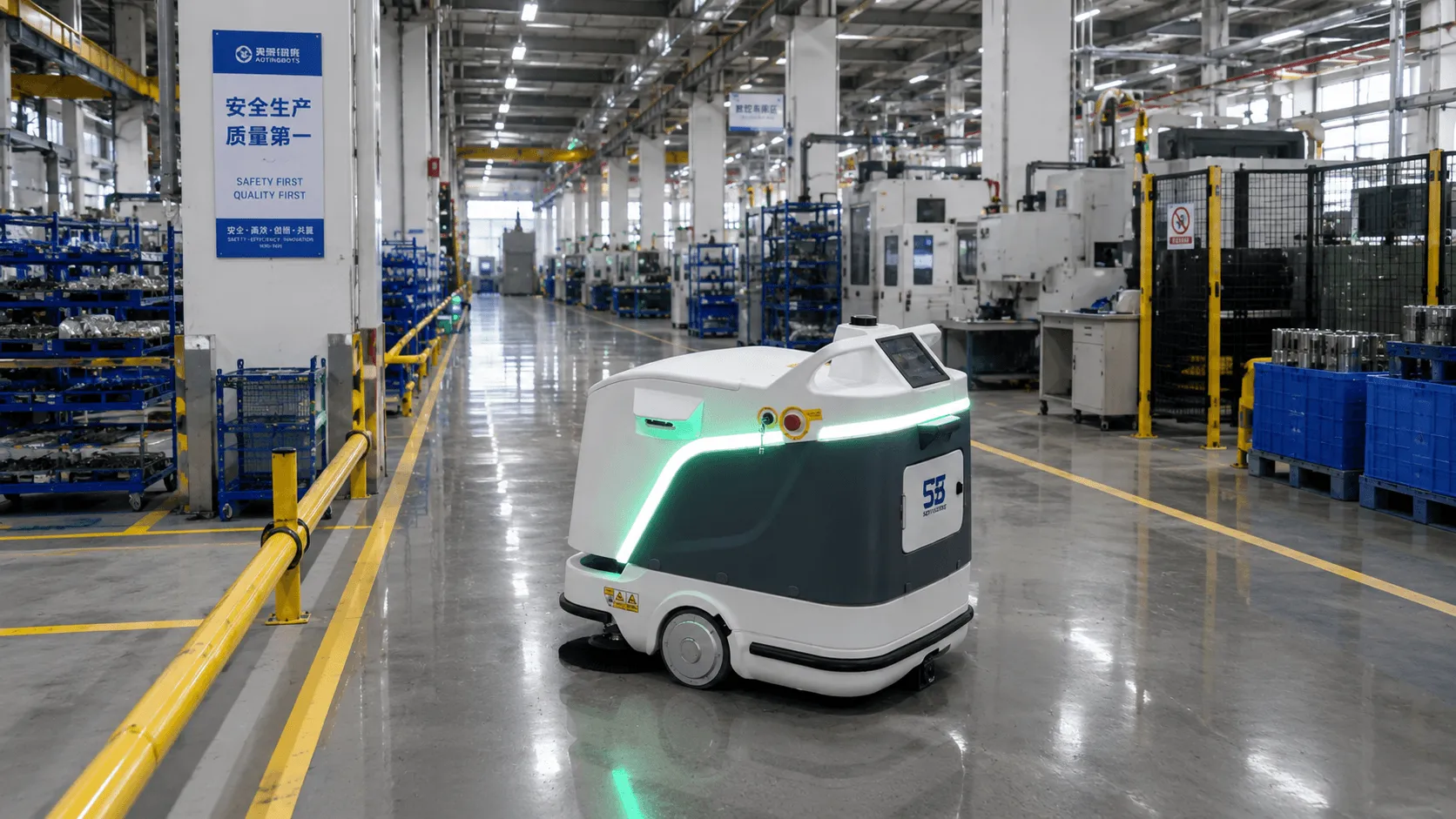
Safety is the non-negotiable pillar of industrial automation. Because these machines operate in proximity to employees and customers, they must adhere to rigorous international standards.
Redundant Emergency Stops: Physical e-stop buttons must be easily accessible.
Active Deceleration: The robot should use its sensor array to slow down when humans are detected nearby, rather than just stopping abruptly.
Compliance: Look for certifications such as CE for European markets or UL for North America. Adherence to ISO 13482 specifically governs the safety requirements for personal care and service robots, ensuring they are built to handle public interactions safely.
When reviewing the Aoting product lineup, it becomes clear that the "best" features depend on the facility type. A hospital requires ultra-quiet operation and medical-grade disinfection modules (UVC or chemical misting), whereas a logistics warehouse prioritizes high-speed sweeping and extreme durability against dust and vibration.
Before procurement, verify that the manufacturer provides a robust After-sales Support Framework. In the industrial sector, a robot that is down for a week due to a lack of spare parts is a failed investment. Prioritize suppliers who offer modular designs where wear-and-tear parts (brushes, squeegees, filters) can be replaced by on-site staff in minutes.
What is the difference between LiDAR and VSLAM in floor cleaning?
LiDAR uses laser pulses to create a precise 3D map of the environment and is generally more reliable in low-light or high-contrast industrial settings. VSLAM (Visual SLAM) uses cameras to identify landmarks; while cost-effective, it can struggle in environments with changing lighting or repetitive visual patterns.
How does a water recycling system benefit a commercial facility?
Water recycling systems filter and reuse the water collected by the squeegee. This can reduce water consumption by up to 70%, significantly extending the cleaning duration per fill and allowing the robot to cover larger areas like airport terminals without manual intervention.
Can commercial cleaning robots work on all floor types?
Most industrial robots are optimized for hard surfaces like epoxy, polished concrete, marble, and tile. For facilities with mixed flooring (carpet and hard floor), ensure the robot has an auto-lifting brush mechanism or specific sensor settings to avoid wetting carpeted areas.
What safety standards should I look for in a B2B cleaning robot?
At a minimum, ensure the device is CE or UL certified. For higher-level safety in public spaces, look for compliance with ISO 13482, which focuses on the safety of service robots in human-occupied environments.
ISO 13482:2014 - Robots and robotic devices — Safety requirements for personal care robots.
https://www.iso.org/standards.html
IEEE Xplore - Technical papers on SLAM (Simultaneous Localization and Mapping) in indoor environments.
https://www.ieee.org/
SGS/TÜV Rheinland - Industrial robotics safety and EMC (Electromagnetic Compatibility) testing whitepapers.
International Federation of Robotics (IFR) - Professional Service Robots Market Analysis and Technical Trends.
Selecting an automated floor cleaning solution for commercial or industrial environments requires looking beyond basic vacuuming capabilities. In high-traffic zones like hospitals, logistics centers, or manufacturing plants, the "features" of a robot translate directly into ROI, safety, and operational uptime. Facility managers must evaluate these machines as integrated assets within a broader maintenance ecosystem rather than standalone gadgets.
The transition from manual cleaning to autonomous systems involves understanding the interplay between sensor hardware, navigation algorithms, and mechanical cleaning efficiency. This guide breaks down the essential technical features that define a high-performance floor cleaning robot.
The core of any autonomous cleaner is its ability to perceive and navigate complex environments. For professional settings, standard "bump-and-turn" logic is obsolete. The industry gold standard is SLAM (Simultaneous Localization and Mapping) technology.
Reliable robots utilize a fusion of sensors, typically including LiDAR (Light Detection and Ranging), 3D Depth Cameras, and Ultrasonic sensors. This multi-modal approach ensures the robot can detect low-profile obstacles, glass partitions, and drop-offs (cliffs) even in changing lighting conditions. When evaluating a robot’s mapping capabilities, look for:
Real-time Path Planning: The ability to recalculate routes instantly when a new obstacle—such as a forklift or a display pallet—is placed in its path.
Multi-floor Mapping: Professional-grade systems should store several maps and recognize their location automatically upon deployment.
Localization Accuracy: A deviation of more than a few centimeters can lead to missed spots or collisions with delicate equipment.
A robot is only as valuable as the cleanliness of the floor it leaves behind. In industrial contexts, the distinction between a "sweeper" and a "scrubber" is vital. High-end models, such as those developed by Aotingbot, often integrate modular cleaning heads to handle diverse debris types.
Key mechanical specifications include:
Down-pressure Control: For stubborn stains on concrete or epoxy floors, adjustable brush pressure (measured in kg) is necessary to ensure deep cleaning without damaging the surface.
Suction Power and Squeegee Performance: Efficient water recovery is a safety requirement. A high-wattage vacuum motor combined with a professional-grade parabolic squeegee ensures the floor is dry immediately after the pass, preventing slip-and-fall accidents.
Dual-purpose Modules: Some advanced systems allow for rapid switching between roller brushes (for textured floors) and disc brushes (for smooth, polished surfaces).
True ROI in automation comes from reducing the "babysitting" time required by staff. Look for features that support Full Autonomy rather than just autonomous movement.
Automated Workstations: High-tier commercial robots utilize docking stations that do more than just charge the battery. They should automate water drainage, clean-water refilling, and even brush self-cleaning.
Water Recycling Systems: In large-scale facilities, water is a significant cost and logistical burden. Advanced filtration systems can recycle gray water, extending the robot's runtime per tank and reducing environmental impact.
Battery Management Systems (BMS): Lithium Iron Phosphate (LiFePO4) batteries are preferred for industrial use due to their high cycle life and thermal stability. Ensure the robot supports "Break-point Resumption"—the ability to return to its dock when low on power and resume the exact spot it left off after charging.
In a B2B environment, a single robot is rarely enough. The ability to manage a fleet of machines through a centralized Cloud Management Platform is essential for operations managers.
The software should provide real-time telemetry data, including cleaning coverage maps, water consumption metrics, and component health monitoring (e.g., brush wear and battery degradation). API integration is another factor for "Smart Building" initiatives, allowing the robot to communicate with elevators or automated doors to move between zones without human assistance.
Safety is the non-negotiable pillar of industrial automation. Because these machines operate in proximity to employees and customers, they must adhere to rigorous international standards.
Redundant Emergency Stops: Physical e-stop buttons must be easily accessible.
Active Deceleration: The robot should use its sensor array to slow down when humans are detected nearby, rather than just stopping abruptly.
Compliance: Look for certifications such as CE for European markets or UL for North America. Adherence to ISO 13482 specifically governs the safety requirements for personal care and service robots, ensuring they are built to handle public interactions safely.
When reviewing the Aoting product lineup, it becomes clear that the "best" features depend on the facility type. A hospital requires ultra-quiet operation and medical-grade disinfection modules (UVC or chemical misting), whereas a logistics warehouse prioritizes high-speed sweeping and extreme durability against dust and vibration.
Before procurement, verify that the manufacturer provides a robust After-sales Support Framework. In the industrial sector, a robot that is down for a week due to a lack of spare parts is a failed investment. Prioritize suppliers who offer modular designs where wear-and-tear parts (brushes, squeegees, filters) can be replaced by on-site staff in minutes.
What is the difference between LiDAR and VSLAM in floor cleaning?
LiDAR uses laser pulses to create a precise 3D map of the environment and is generally more reliable in low-light or high-contrast industrial settings. VSLAM (Visual SLAM) uses cameras to identify landmarks; while cost-effective, it can struggle in environments with changing lighting or repetitive visual patterns.
How does a water recycling system benefit a commercial facility?
Water recycling systems filter and reuse the water collected by the squeegee. This can reduce water consumption by up to 70%, significantly extending the cleaning duration per fill and allowing the robot to cover larger areas like airport terminals without manual intervention.
Can commercial cleaning robots work on all floor types?
Most industrial robots are optimized for hard surfaces like epoxy, polished concrete, marble, and tile. For facilities with mixed flooring (carpet and hard floor), ensure the robot has an auto-lifting brush mechanism or specific sensor settings to avoid wetting carpeted areas.
What safety standards should I look for in a B2B cleaning robot?
At a minimum, ensure the device is CE or UL certified. For higher-level safety in public spaces, look for compliance with ISO 13482, which focuses on the safety of service robots in human-occupied environments.
ISO 13482:2014 - Robots and robotic devices — Safety requirements for personal care robots.
https://www.iso.org/standards.html
IEEE Xplore - Technical papers on SLAM (Simultaneous Localization and Mapping) in indoor environments.
https://www.ieee.org/
SGS/TÜV Rheinland - Industrial robotics safety and EMC (Electromagnetic Compatibility) testing whitepapers.
International Federation of Robotics (IFR) - Professional Service Robots Market Analysis and Technical Trends.
CONTACT US
we aim to become a global leader in manufacturer space service robotics and artificial intelligence.


