
CONTACT US
SEARCH WHAT YOU WANT
Industrial environments are shifting from manual janitorial schedules to integrated, data-driven floor maintenance. This transition is driven by the need for consistent cleanliness in high-precision manufacturing zones. Manual cleaning often results in "blind spots" and inconsistent chemical application.
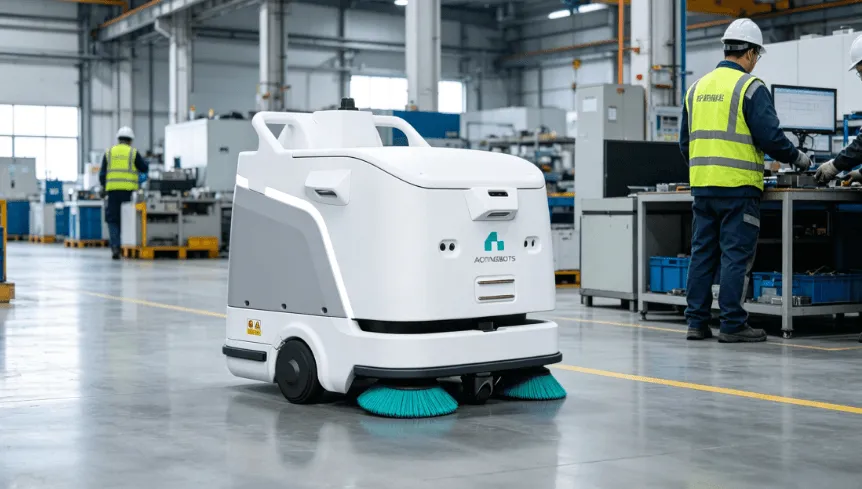
Autonomous cleaning robots address these gaps by ensuring 100% area coverage and predictable duty cycles. In a 24/7 manufacturing facility, downtime for floor maintenance is non-existent. Robots operate during shift changes or alongside active production lines without interrupting the workflow.
The core value lies in "Cleaning Throughput." While a manual operator’s efficiency drops due to fatigue, an industrial robot maintains a constant square-meter-per-hour rate. This consistency allows facility managers to forecast maintenance costs with surgical precision.
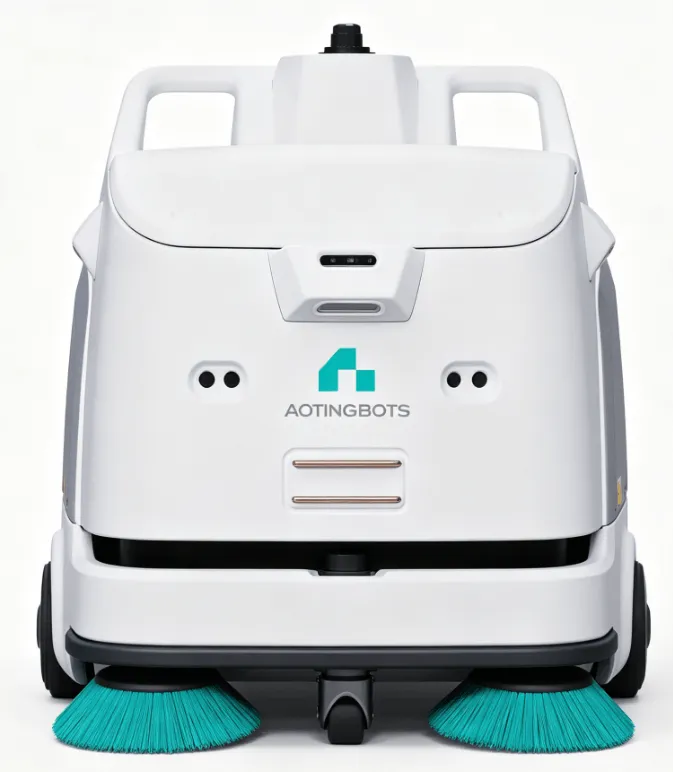
The efficiency of an autonomous cleaning robot is measured by its "Effective Cleaning Rate." In large-scale factories, the ability to cover 10,000 to 15,000 square meters on a single charge is a baseline requirement. Robots utilize advanced sensor fusion to navigate complex layouts that change daily.
Efficiency is also gained through "Predictive Navigation." Modern robots do not just move randomly. They use SLAM (Simultaneous Localization and Mapping) to calculate the most energy-efficient path, reducing redundant passes and battery drain.
Factory floors are dynamic environments. Forklifts, AGVs (Automated Guided Vehicles), and personnel create a "high-entropy" space. An efficient cleaning robot must possess a high "Spatial Intelligence" to avoid bottlenecks.
Most industrial units now employ a multi-layered safety stack:
LiDAR (Light Detection and Ranging): For long-range environment mapping and static obstacle detection.
3D Depth Cameras: To identify "negative obstacles" (drops) or objects hanging from machines.
Ultrasonic Sensors: For detecting glass or highly reflective surfaces that LiDAR might miss.
When these sensors detect a blockage, the robot recalculates its route in real-time. This prevents the "trapped robot" scenario that plagued early-generation automation. For a facility manager, this means the robot requires zero "babysitting," freeing up staff for higher-value technical tasks.
In heavy manufacturing, a standard commercial robot will fail. Dust, metal shavings, and oil-based residues require high-torque scrubbing and robust filtration. The SW80-A autonomous cleaning robot is engineered specifically for these rigorous demands.
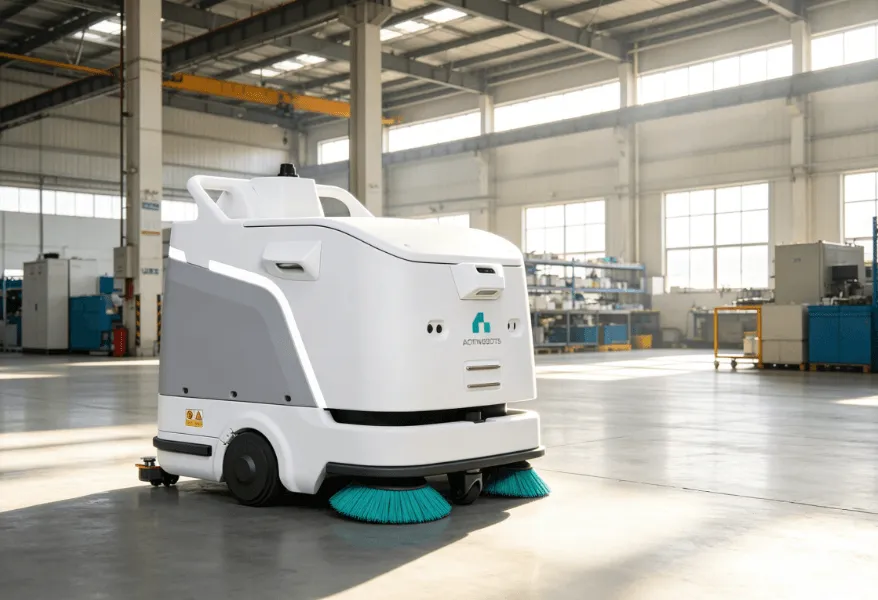
Key efficiency drivers in industrial-grade units include:
Dual-Action Systems: Combining sweeping and scrubbing into a single pass reduces total cleaning time by 50%.
High-Capacity Tanks: Industrial units often feature 100L+ water tanks, reducing the frequency of "Pit Stops" for refills.
Autonomous Docking: The ability for the robot to return to a station, dump wastewater, refill clean water, and recharge without human intervention.
For factories focusing on "Lean Manufacturing," every minute of human intervention is a cost. By automating the "refill and recharge" cycle, the SW80-A ensures that the floor is maintained at peak hygiene levels without adding to the facility's labor overhead.
Efficiency is not just about moving brushes; it is about information. Autonomous robots act as mobile IoT nodes. They collect data on which areas of the factory accumulate the most debris, allowing managers to adjust production workflows or air filtration settings.
Through cloud-based dashboards, OEM project managers can view:
Heat Maps: Visual representations of cleaned areas.
Resource Metrics: Total water and detergent consumption per shift.
Maintenance Alerts: Proactive notifications for brush replacements or sensor cleaning.
This level of transparency eliminates the "black box" of facility management. You no longer guess if the warehouse was cleaned; you have a digital timestamp and a coverage percentage report.
When evaluating autonomous cleaning robots for a factory, the initial CAPEX (Capital Expenditure) is often the focus. However, the true value is found in the TCO over a 3-to-5-year period.
The reduction in "Variable Costs" is significant:
Labor Reallocation: Staff previously dedicated to floor scrubbing are moved to quality control or assembly.
Consumable Optimization: Robots use up to 30% less water and chemicals due to precise flow-control technology.
Machine Longevity: Autonomous units operate within their designed mechanical limits, reducing the "wear and tear" often caused by aggressive manual operation.
In most 2-shift or 3-shift factory environments, the ROI (Return on Investment) for a high-performance unit like the SW80-A is typically achieved within 12 to 18 months.
Not every robot fits every floor. When selecting a unit, engineers must consider "Surface Compatibility." A polished concrete floor in an electronics assembly plant has different friction requirements than a slip-resistant epoxy floor in a chemical processing plant.
Consider the following technical specifications before procurement:
Climbing Ability: Can the robot handle ramps between different production zones?
Width of the Cleaning Path: Does it fit through your narrowest racking aisles?
Filtration Grade: Does the vacuum system exhaust clean air, or does it kick up fine dust (PM2.5)?
Effective factory cleaning is a pillar of workplace safety. Clean floors reduce slip-and-fall accidents and prevent the buildup of combustible dust. By integrating autonomous solutions, factories move toward a "Continuous Clean" state, which is the hallmark of modern, efficient manufacturing.
How do autonomous robots handle oil spills or heavy grease?
Most industrial robots, such as the SW80-A, are designed for "scrubbing." They use high-pressure rotating brushes and industrial detergents to emulsify oils. However, for massive, concentrated spills, manual spot-cleaning is still recommended before the robot performs its maintenance pass to avoid contaminating the internal tanks.
Can these robots operate in complete darkness?
Yes. Unlike human operators or camera-only systems, robots using LiDAR and ultrasonic sensors do not require ambient light to navigate. This allows for "lights-out" cleaning during non-operational hours, further saving on factory energy costs.
What is the typical lifespan of an industrial cleaning robot battery?
Standard lithium-iron-phosphate (LiFePO4) batteries used in high-end units typically last for 2,000 to 3,000 charge cycles. With daily use, this equates to roughly 5–8 years of operational life before a battery replacement is required.
How does the robot integrate with existing factory safety protocols?
Autonomous robots are programmed as "Class 1" AGVs in many jurisdictions. They follow strict ISO 3691-4 safety standards, ensuring they stop instantly if a human enters their safety envelope and maintain a predictable speed in high-traffic zones.
Is it difficult to remap the factory if the production line layout changes?
No. Modern SLAM-based robots allow for "Dynamic Mapping." If you move a machine or add new racking, the robot can either update its map automatically during its next run or a technician can "drive" it through the new path once to update the digital floor plan.
ISO 3691-4:2023: Industrial trucks — Safety requirements and verification — Part 4: Driverless industrial trucks and their systems.
ASTM F45: Standard Committee on Robotics, Automation, and Autonomous Systems.
International Federation of Robotics (IFR): World Robotics Report on Service Robots.
SGS Certification: Technical standards for industrial cleaning equipment safety and battery compliance.
Industrial environments are shifting from manual janitorial schedules to integrated, data-driven floor maintenance. This transition is driven by the need for consistent cleanliness in high-precision manufacturing zones. Manual cleaning often results in "blind spots" and inconsistent chemical application.
Autonomous cleaning robots address these gaps by ensuring 100% area coverage and predictable duty cycles. In a 24/7 manufacturing facility, downtime for floor maintenance is non-existent. Robots operate during shift changes or alongside active production lines without interrupting the workflow.
The core value lies in "Cleaning Throughput." While a manual operator’s efficiency drops due to fatigue, an industrial robot maintains a constant square-meter-per-hour rate. This consistency allows facility managers to forecast maintenance costs with surgical precision.
The efficiency of an autonomous cleaning robot is measured by its "Effective Cleaning Rate." In large-scale factories, the ability to cover 10,000 to 15,000 square meters on a single charge is a baseline requirement. Robots utilize advanced sensor fusion to navigate complex layouts that change daily.
Efficiency is also gained through "Predictive Navigation." Modern robots do not just move randomly. They use SLAM (Simultaneous Localization and Mapping) to calculate the most energy-efficient path, reducing redundant passes and battery drain.
Factory floors are dynamic environments. Forklifts, AGVs (Automated Guided Vehicles), and personnel create a "high-entropy" space. An efficient cleaning robot must possess a high "Spatial Intelligence" to avoid bottlenecks.
Most industrial units now employ a multi-layered safety stack:
LiDAR (Light Detection and Ranging): For long-range environment mapping and static obstacle detection.
3D Depth Cameras: To identify "negative obstacles" (drops) or objects hanging from machines.
Ultrasonic Sensors: For detecting glass or highly reflective surfaces that LiDAR might miss.
When these sensors detect a blockage, the robot recalculates its route in real-time. This prevents the "trapped robot" scenario that plagued early-generation automation. For a facility manager, this means the robot requires zero "babysitting," freeing up staff for higher-value technical tasks.
In heavy manufacturing, a standard commercial robot will fail. Dust, metal shavings, and oil-based residues require high-torque scrubbing and robust filtration. The SW80-A autonomous cleaning robot is engineered specifically for these rigorous demands.
Key efficiency drivers in industrial-grade units include:
Dual-Action Systems: Combining sweeping and scrubbing into a single pass reduces total cleaning time by 50%.
High-Capacity Tanks: Industrial units often feature 100L+ water tanks, reducing the frequency of "Pit Stops" for refills.
Autonomous Docking: The ability for the robot to return to a station, dump wastewater, refill clean water, and recharge without human intervention.
For factories focusing on "Lean Manufacturing," every minute of human intervention is a cost. By automating the "refill and recharge" cycle, the SW80-A ensures that the floor is maintained at peak hygiene levels without adding to the facility's labor overhead.
Efficiency is not just about moving brushes; it is about information. Autonomous robots act as mobile IoT nodes. They collect data on which areas of the factory accumulate the most debris, allowing managers to adjust production workflows or air filtration settings.
Through cloud-based dashboards, OEM project managers can view:
Heat Maps: Visual representations of cleaned areas.
Resource Metrics: Total water and detergent consumption per shift.
Maintenance Alerts: Proactive notifications for brush replacements or sensor cleaning.
This level of transparency eliminates the "black box" of facility management. You no longer guess if the warehouse was cleaned; you have a digital timestamp and a coverage percentage report.
When evaluating autonomous cleaning robots for a factory, the initial CAPEX (Capital Expenditure) is often the focus. However, the true value is found in the TCO over a 3-to-5-year period.
The reduction in "Variable Costs" is significant:
Labor Reallocation: Staff previously dedicated to floor scrubbing are moved to quality control or assembly.
Consumable Optimization: Robots use up to 30% less water and chemicals due to precise flow-control technology.
Machine Longevity: Autonomous units operate within their designed mechanical limits, reducing the "wear and tear" often caused by aggressive manual operation.
In most 2-shift or 3-shift factory environments, the ROI (Return on Investment) for a high-performance unit like the SW80-A is typically achieved within 12 to 18 months.
Not every robot fits every floor. When selecting a unit, engineers must consider "Surface Compatibility." A polished concrete floor in an electronics assembly plant has different friction requirements than a slip-resistant epoxy floor in a chemical processing plant.
Consider the following technical specifications before procurement:
Climbing Ability: Can the robot handle ramps between different production zones?
Width of the Cleaning Path: Does it fit through your narrowest racking aisles?
Filtration Grade: Does the vacuum system exhaust clean air, or does it kick up fine dust (PM2.5)?
Effective factory cleaning is a pillar of workplace safety. Clean floors reduce slip-and-fall accidents and prevent the buildup of combustible dust. By integrating autonomous solutions, factories move toward a "Continuous Clean" state, which is the hallmark of modern, efficient manufacturing.
How do autonomous robots handle oil spills or heavy grease?
Most industrial robots, such as the SW80-A, are designed for "scrubbing." They use high-pressure rotating brushes and industrial detergents to emulsify oils. However, for massive, concentrated spills, manual spot-cleaning is still recommended before the robot performs its maintenance pass to avoid contaminating the internal tanks.
Can these robots operate in complete darkness?
Yes. Unlike human operators or camera-only systems, robots using LiDAR and ultrasonic sensors do not require ambient light to navigate. This allows for "lights-out" cleaning during non-operational hours, further saving on factory energy costs.
What is the typical lifespan of an industrial cleaning robot battery?
Standard lithium-iron-phosphate (LiFePO4) batteries used in high-end units typically last for 2,000 to 3,000 charge cycles. With daily use, this equates to roughly 5–8 years of operational life before a battery replacement is required.
How does the robot integrate with existing factory safety protocols?
Autonomous robots are programmed as "Class 1" AGVs in many jurisdictions. They follow strict ISO 3691-4 safety standards, ensuring they stop instantly if a human enters their safety envelope and maintain a predictable speed in high-traffic zones.
Is it difficult to remap the factory if the production line layout changes?
No. Modern SLAM-based robots allow for "Dynamic Mapping." If you move a machine or add new racking, the robot can either update its map automatically during its next run or a technician can "drive" it through the new path once to update the digital floor plan.
ISO 3691-4:2023: Industrial trucks — Safety requirements and verification — Part 4: Driverless industrial trucks and their systems.
ASTM F45: Standard Committee on Robotics, Automation, and Autonomous Systems.
International Federation of Robotics (IFR): World Robotics Report on Service Robots.
SGS Certification: Technical standards for industrial cleaning equipment safety and battery compliance.
CONTACT US
we aim to become a global leader in manufacturer space service robotics and artificial intelligence.


