
CONTACT US
SEARCH WHAT YOU WANT
Maintaining floor hygiene in large-scale manufacturing environments is a significant operational bottleneck. Traditional manual methods often fail to meet the rigorous standards required by modern safety and quality audits. High-performance industrial floor cleaning solutions have transitioned from manual labor to autonomous systems to address these systemic inefficiencies.
For facility managers and plant engineers, the shift toward robotics is driven by the need for consistency, safety, and data transparency. Industrial floors are often subjected to diverse contaminants, from fine pallet dust to oil residues and metal shavings. Managing these diverse stressors requires a technical approach that goes beyond a standard mop and bucket.
Large-volume production facilities face unique stressors that standard commercial cleaning tools cannot withstand. The primary challenges in maintaining these environments often revolve around labor and environmental complexity.
Labor Shortage and Turnover: Floor cleaning is often seen as a low-skill, high-fatigue task, leading to high employee turnover.
Cleaning Inconsistency: Human operators often skip corners or high-traffic zones due to fatigue or lack of oversight.
Operational Interference: Cleaning crews often disrupt the flow of forklifts and Automated Guided Vehicles (AGVs) in busy aisles.
Resource Management: Inefficient use of water and chemical detergents increases operational costs and environmental impact.
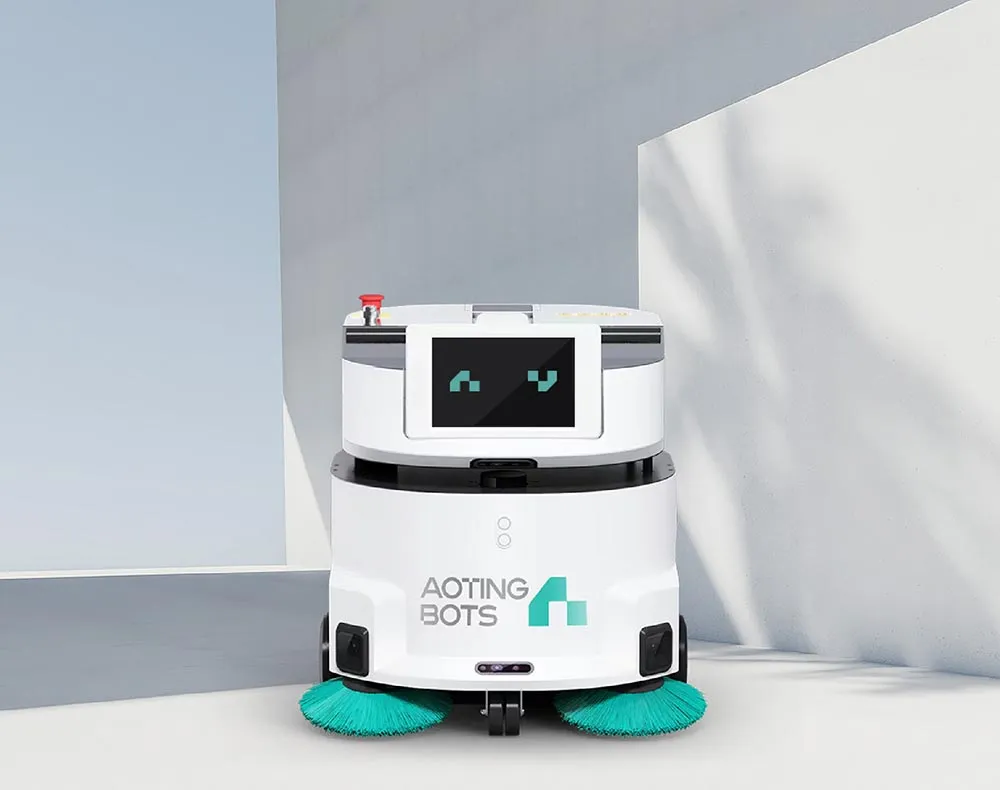
Robotic platforms utilize mathematically optimized path planning to ensure 100% floor coverage. Unlike manual scrubbing, which relies on the operator's subjective assessment, robots follow a digital map with precision.
By utilizing SLAM (Simultaneous Localization and Mapping), autonomous robots can identify "missed spots" and re-calculate routes in real-time. This ensures that the facility meets the high hygiene standards required for ISO 9001 and food-grade compliance.
Safety is the highest priority in any factory environment. The primary risk with manual cleaning is the "slip-and-fall" hazard created by wet floors. Robots solve this by integrating high-airflow vacuum systems that leave floors dry almost instantly.
Modern robots also employ "Sensor Fusion," combining LiDAR, 3D ToF (Time of Flight) cameras, and ultrasonic sensors. These technologies allow the robot to distinguish between static racking and dynamic obstacles like workers or moving forklifts. If an object is detected, the robot can pause its path or calculate an alternative route without human intervention.
Implementing these systems aligns with OSHA requirements for walking-working surfaces. It reduces the liability risks associated with human operators moving heavy machinery in crowded production zones.
A major gap in traditional industrial floor cleaning solutions is the lack of verifiable data. Facility managers often struggle to track if a specific zone was cleaned or how much water was consumed. Robots bridge this gap through Integrated Industrial IoT (IIoT).
Digital dashboards provide "Proof of Clean" reports, showing exactly which areas were sanitized and the total volume of materials used. This data allows for precise cost-per-square-meter calculations. Manufacturers can then optimize their chemical consumption based on actual floor soil levels, reducing waste and supporting ISO 14001 environmental goals.
Automated systems also minimize "Mechanical Wear." By maintaining consistent brush pressure, the robot prevents the premature erosion of expensive epoxy floor coatings. This extends the lifespan of the facility's physical infrastructure.
Successful deployment in a factory requires more than just a smart machine. It requires an understanding of existing manufacturing workflows. Robots must be programmed to avoid peak forklift hours or operate during "lights-out" shifts.
Real-world deployments, such as those documented in Aotingbot’s factory case studies, demonstrate the scalability of these systems. In high-output automotive or electronics plants, multiple robots can be managed from a single cloud interface. This centralized control ensures that maintenance tasks do not conflict with production schedules.
Project managers should evaluate "Docking Capability" during the procurement phase. A truly autonomous system should return to a station to refill water, empty recovery tanks, and recharge its batteries. This "Closed-Loop" maintenance reduces the need for human intervention to less than 10 minutes per day.
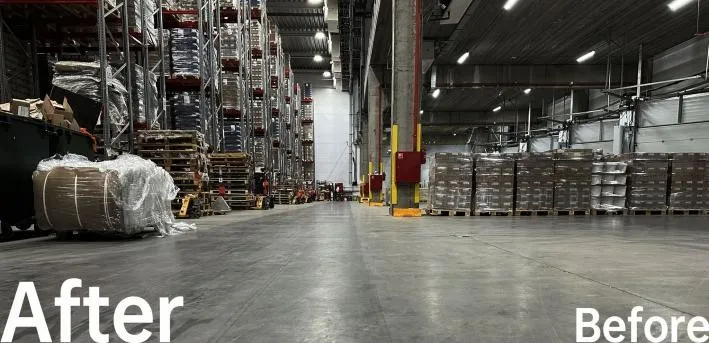
Most large-scale facilities see a return on investment within 12 to 18 months. This is achieved through reduced labor costs, lower chemical waste, and fewer slip-and-fall insurance claims.
Yes. Modern robots use LiDAR and 3D cameras to detect moving objects. They are programmed to yield the right of way to industrial vehicles or stop completely until the path is clear.
Standard scrubbers are effective for dust and dirt. For industrial oil spills, robots must be equipped with specialized cylindrical brushes and high-concentration degreasers to ensure the floor's coefficient of friction (CoF) is restored.
Staff typically only need a basic 1-day orientation. Most industrial robots feature a user-friendly interface that allows workers to select pre-mapped zones or start scheduled cycles with a single button.
High-tier robots are designed with specialized suspension systems to navigate standard facility ramps and minor floor transitions (up to 1-2cm). However, extreme surface irregularities may require specific hardware configurations.
ISO 13482:2014: Robots and robotic devices — Safety requirements for personal care robots (includes industrial mobile bases). ISO.org
ASTM F45: New standards for evaluating the performance of automated floor cleaning robots. ASTM.org
OSHA 1910 Subpart D: Standards for walking-working surfaces in industrial settings. OSHA.gov
IEEE Robotics and Automation Society: Technical whitepapers on SLAM navigation and sensor fusion for AMRs. IEEE.org
SGS Certification: Safety and efficiency testing for industrial autonomous hardware.
Maintaining floor hygiene in large-scale manufacturing environments is a significant operational bottleneck. Traditional manual methods often fail to meet the rigorous standards required by modern safety and quality audits. High-performance industrial floor cleaning solutions have transitioned from manual labor to autonomous systems to address these systemic inefficiencies.
For facility managers and plant engineers, the shift toward robotics is driven by the need for consistency, safety, and data transparency. Industrial floors are often subjected to diverse contaminants, from fine pallet dust to oil residues and metal shavings. Managing these diverse stressors requires a technical approach that goes beyond a standard mop and bucket.
Large-volume production facilities face unique stressors that standard commercial cleaning tools cannot withstand. The primary challenges in maintaining these environments often revolve around labor and environmental complexity.
Labor Shortage and Turnover: Floor cleaning is often seen as a low-skill, high-fatigue task, leading to high employee turnover.
Cleaning Inconsistency: Human operators often skip corners or high-traffic zones due to fatigue or lack of oversight.
Operational Interference: Cleaning crews often disrupt the flow of forklifts and Automated Guided Vehicles (AGVs) in busy aisles.
Resource Management: Inefficient use of water and chemical detergents increases operational costs and environmental impact.
Robotic platforms utilize mathematically optimized path planning to ensure 100% floor coverage. Unlike manual scrubbing, which relies on the operator's subjective assessment, robots follow a digital map with precision.
By utilizing SLAM (Simultaneous Localization and Mapping), autonomous robots can identify "missed spots" and re-calculate routes in real-time. This ensures that the facility meets the high hygiene standards required for ISO 9001 and food-grade compliance.
Safety is the highest priority in any factory environment. The primary risk with manual cleaning is the "slip-and-fall" hazard created by wet floors. Robots solve this by integrating high-airflow vacuum systems that leave floors dry almost instantly.
Modern robots also employ "Sensor Fusion," combining LiDAR, 3D ToF (Time of Flight) cameras, and ultrasonic sensors. These technologies allow the robot to distinguish between static racking and dynamic obstacles like workers or moving forklifts. If an object is detected, the robot can pause its path or calculate an alternative route without human intervention.
Implementing these systems aligns with OSHA requirements for walking-working surfaces. It reduces the liability risks associated with human operators moving heavy machinery in crowded production zones.
A major gap in traditional industrial floor cleaning solutions is the lack of verifiable data. Facility managers often struggle to track if a specific zone was cleaned or how much water was consumed. Robots bridge this gap through Integrated Industrial IoT (IIoT).
Digital dashboards provide "Proof of Clean" reports, showing exactly which areas were sanitized and the total volume of materials used. This data allows for precise cost-per-square-meter calculations. Manufacturers can then optimize their chemical consumption based on actual floor soil levels, reducing waste and supporting ISO 14001 environmental goals.
Automated systems also minimize "Mechanical Wear." By maintaining consistent brush pressure, the robot prevents the premature erosion of expensive epoxy floor coatings. This extends the lifespan of the facility's physical infrastructure.
Successful deployment in a factory requires more than just a smart machine. It requires an understanding of existing manufacturing workflows. Robots must be programmed to avoid peak forklift hours or operate during "lights-out" shifts.
Real-world deployments, such as those documented in Aotingbot’s factory case studies, demonstrate the scalability of these systems. In high-output automotive or electronics plants, multiple robots can be managed from a single cloud interface. This centralized control ensures that maintenance tasks do not conflict with production schedules.
Project managers should evaluate "Docking Capability" during the procurement phase. A truly autonomous system should return to a station to refill water, empty recovery tanks, and recharge its batteries. This "Closed-Loop" maintenance reduces the need for human intervention to less than 10 minutes per day.
Most large-scale facilities see a return on investment within 12 to 18 months. This is achieved through reduced labor costs, lower chemical waste, and fewer slip-and-fall insurance claims.
Yes. Modern robots use LiDAR and 3D cameras to detect moving objects. They are programmed to yield the right of way to industrial vehicles or stop completely until the path is clear.
Standard scrubbers are effective for dust and dirt. For industrial oil spills, robots must be equipped with specialized cylindrical brushes and high-concentration degreasers to ensure the floor's coefficient of friction (CoF) is restored.
Staff typically only need a basic 1-day orientation. Most industrial robots feature a user-friendly interface that allows workers to select pre-mapped zones or start scheduled cycles with a single button.
High-tier robots are designed with specialized suspension systems to navigate standard facility ramps and minor floor transitions (up to 1-2cm). However, extreme surface irregularities may require specific hardware configurations.
ISO 13482:2014: Robots and robotic devices — Safety requirements for personal care robots (includes industrial mobile bases). ISO.org
ASTM F45: New standards for evaluating the performance of automated floor cleaning robots. ASTM.org
OSHA 1910 Subpart D: Standards for walking-working surfaces in industrial settings. OSHA.gov
IEEE Robotics and Automation Society: Technical whitepapers on SLAM navigation and sensor fusion for AMRs. IEEE.org
SGS Certification: Safety and efficiency testing for industrial autonomous hardware.
CONTACT US
we aim to become a global leader in manufacturer space service robotics and artificial intelligence.


