
CONTACT US
SEARCH WHAT YOU WANT
The industrial cleaning landscape is undergoing a fundamental shift. Traditional manual methods are increasingly replaced by autonomous systems capable of high-precision sanitation. This transition is driven by the need for consistent hygiene standards in large-scale facilities.
AI-driven industrial cleaning refers to the integration of machine learning and robotics into sanitation workflows. Unlike programmed machines, these robots adapt to dynamic environments. They utilize real-time data to optimize cleaning paths and avoid obstacles.
This technology addresses labor shortages and rising operational costs. By automating repetitive tasks, facilities can reallocate human workers to higher-value technical roles. The result is a more resilient and efficient operational model.
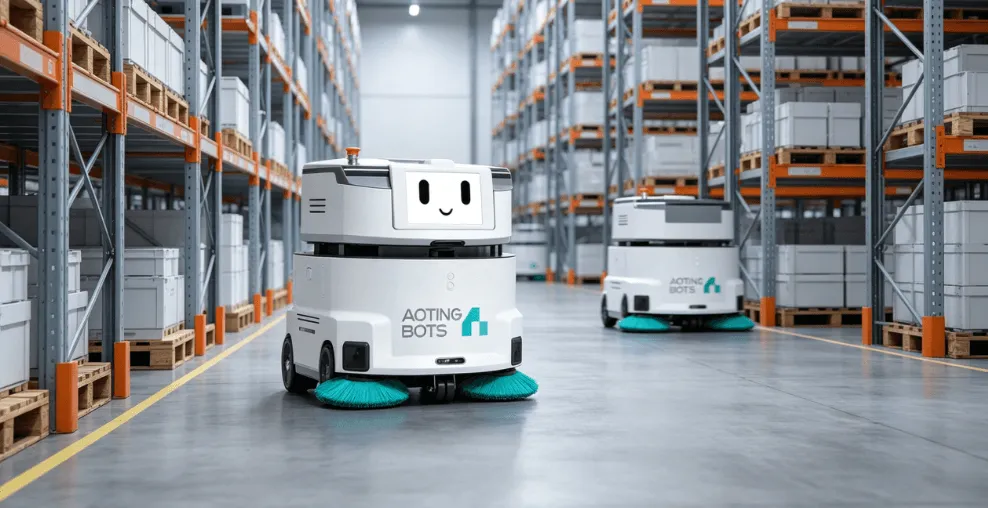
Modern autonomous cleaners rely on a complex stack of hardware and software. These systems must process massive amounts of spatial data in milliseconds. Understanding these components is essential for facility managers evaluating automation.
1.SLAM and Real-Time Navigation
Simultaneous Localization and Mapping (SLAM) allows robots to build maps of unknown environments. Using laser scanners and odometry, the robot calculates its exact position while moving. This ensures 100% floor coverage without overlapping or missed spots.
2.Sensor Fusion for Collision Avoidance
Reliable operation in busy warehouses requires sensor fusion. This involves combining data from LiDAR, ultrasonic sensors, and 3D cameras. This multi-layered approach ensures the robot detects both static shelving and moving forklifts instantly.
3.Edge Computing and Data Analytics
Onboard processors handle complex path-planning algorithms locally. This reduces latency compared to cloud-processing models. Additionally, these robots collect performance data, allowing for predictive maintenance and resource tracking.
The primary advantage of AI in cleaning is the stabilization of hygiene protocols. In pharmaceutical or food processing plants, precision is a regulatory requirement. Autonomous systems provide a verifiable "digital twin" of all cleaning activities.
Furthermore, AI robots improve Occupational Health and Safety (OHS) metrics. They handle hazardous chemicals and work in low-light conditions without risk. This reduces the frequency of workplace injuries related to slips or chemical exposure.
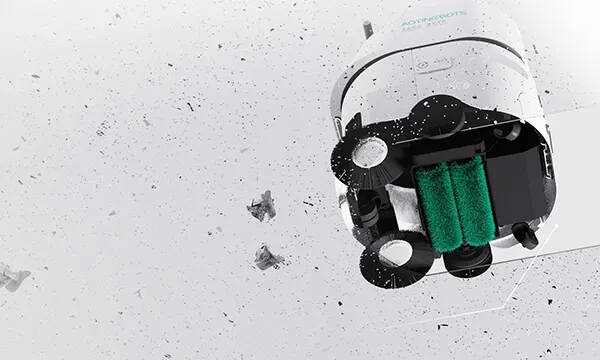
Different industries require specific cleaning logic and hardware configurations. A warehouse has different navigational challenges than a healthcare facility or a manufacturing floor.
Logistics & Warehousing: Robots must navigate narrow aisles and detect "ghost" obstacles like glass or thin wires.
Manufacturing: Focuses on removing heavy industrial dust and oil spills while operating around heavy machinery.
Retail & Malls: Requires high-aesthetic finishes and extreme sensitivity to pedestrian traffic.
As a manufacturer specializing in floor care automation, we developed the Aoting SW55-A to bridge the gap between heavy industrial power and intelligent navigation. This autonomous scrubber-dryer exemplifies how AI manages complex cleaning variables.
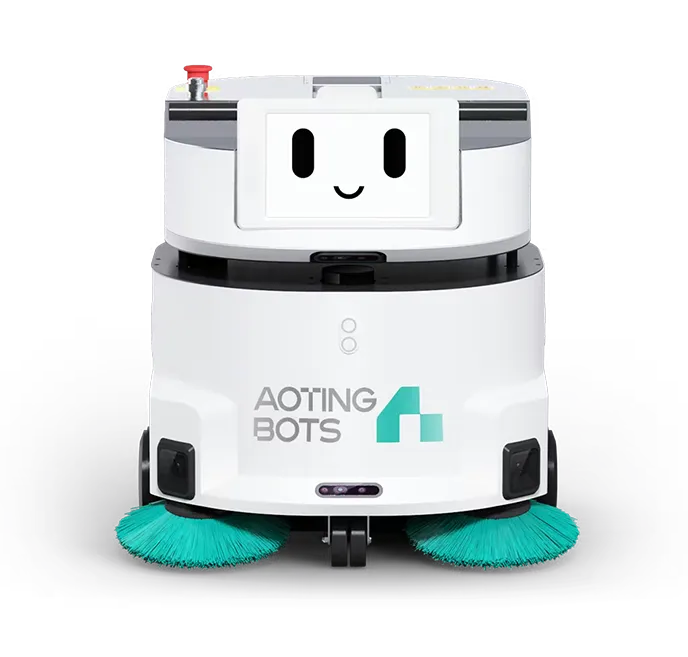
The SW55-A utilizes advanced AI algorithms to adjust brush pressure and water flow based on floor type. This prevents damage to sensitive surfaces while ensuring deep cleaning on porous concrete. Its dual-function design allows it to scrub and dry in a single pass, significantly reducing downtime.
By integrating this system, facility managers gain a centralized management platform. You can monitor the cleaning progress of multiple units from a single dashboard. This level of transparency is critical for high-compliance industrial environments.
The next phase of AI cleaning involves "Collaborative Robotics" or Cobots. These units will communicate with building management systems (BMS) to operate elevators and automated doors. This creates a fully touchless cleaning ecosystem across multiple floors.
Energy optimization is another growing trend. Future AI robots will analyze peak energy hours to schedule charging cycles. This aligns industrial cleaning with corporate sustainability goals and reduces the overall carbon footprint.
How do AI cleaning robots navigate around unexpected obstacles?
AI robots use a combination of LiDAR and 3D depth cameras to detect changes in their environment. When an obstacle is detected, the path-planning algorithm recalculates a new route in real-time to maintain efficiency.
Is specialized training required for staff to operate these robots?
Most modern systems, including our autonomous scrubbers, feature intuitive touch-screen interfaces. While initial setup requires mapping, daily operation usually involves simple "start" commands or scheduled autonomous triggers.
Can AI cleaning robots work on all types of industrial flooring?
Yes, most robots are designed for hard surfaces such as epoxy, polished concrete, and tile. Systems like the SW55-A feature adjustable settings to accommodate different friction levels and cleanliness requirements.
What happens if the robot loses its internet connection?
Industrial-grade robots typically use edge computing, meaning the core navigation and cleaning logic reside on the machine. They will continue their mission offline and sync data once the connection is restored.
How does AI improve the lifespan of the cleaning equipment?
AI monitors component health, such as motor torque and battery temperature. By identifying anomalies early, the system alerts operators to perform maintenance before a critical failure occurs, extending the machine's life.
International Federation of Robotics - Service Robots Report
https://ifr.org/service-robots
ASTM International - Standards for Autonomous Surface Cleaning
https://www.astm.org/
Occupational Safety and Health Administration - Robotic Safety
https://www.osha.gov/robotics
The industrial cleaning landscape is undergoing a fundamental shift. Traditional manual methods are increasingly replaced by autonomous systems capable of high-precision sanitation. This transition is driven by the need for consistent hygiene standards in large-scale facilities.
AI-driven industrial cleaning refers to the integration of machine learning and robotics into sanitation workflows. Unlike programmed machines, these robots adapt to dynamic environments. They utilize real-time data to optimize cleaning paths and avoid obstacles.
This technology addresses labor shortages and rising operational costs. By automating repetitive tasks, facilities can reallocate human workers to higher-value technical roles. The result is a more resilient and efficient operational model.
Modern autonomous cleaners rely on a complex stack of hardware and software. These systems must process massive amounts of spatial data in milliseconds. Understanding these components is essential for facility managers evaluating automation.
1.SLAM and Real-Time Navigation
Simultaneous Localization and Mapping (SLAM) allows robots to build maps of unknown environments. Using laser scanners and odometry, the robot calculates its exact position while moving. This ensures 100% floor coverage without overlapping or missed spots.
2.Sensor Fusion for Collision Avoidance
Reliable operation in busy warehouses requires sensor fusion. This involves combining data from LiDAR, ultrasonic sensors, and 3D cameras. This multi-layered approach ensures the robot detects both static shelving and moving forklifts instantly.
3.Edge Computing and Data Analytics
Onboard processors handle complex path-planning algorithms locally. This reduces latency compared to cloud-processing models. Additionally, these robots collect performance data, allowing for predictive maintenance and resource tracking.
The primary advantage of AI in cleaning is the stabilization of hygiene protocols. In pharmaceutical or food processing plants, precision is a regulatory requirement. Autonomous systems provide a verifiable "digital twin" of all cleaning activities.
Furthermore, AI robots improve Occupational Health and Safety (OHS) metrics. They handle hazardous chemicals and work in low-light conditions without risk. This reduces the frequency of workplace injuries related to slips or chemical exposure.
Different industries require specific cleaning logic and hardware configurations. A warehouse has different navigational challenges than a healthcare facility or a manufacturing floor.
Logistics & Warehousing: Robots must navigate narrow aisles and detect "ghost" obstacles like glass or thin wires.
Manufacturing: Focuses on removing heavy industrial dust and oil spills while operating around heavy machinery.
Retail & Malls: Requires high-aesthetic finishes and extreme sensitivity to pedestrian traffic.
As a manufacturer specializing in floor care automation, we developed the Aoting SW55-A to bridge the gap between heavy industrial power and intelligent navigation. This autonomous scrubber-dryer exemplifies how AI manages complex cleaning variables.
The SW55-A utilizes advanced AI algorithms to adjust brush pressure and water flow based on floor type. This prevents damage to sensitive surfaces while ensuring deep cleaning on porous concrete. Its dual-function design allows it to scrub and dry in a single pass, significantly reducing downtime.
By integrating this system, facility managers gain a centralized management platform. You can monitor the cleaning progress of multiple units from a single dashboard. This level of transparency is critical for high-compliance industrial environments.
The next phase of AI cleaning involves "Collaborative Robotics" or Cobots. These units will communicate with building management systems (BMS) to operate elevators and automated doors. This creates a fully touchless cleaning ecosystem across multiple floors.
Energy optimization is another growing trend. Future AI robots will analyze peak energy hours to schedule charging cycles. This aligns industrial cleaning with corporate sustainability goals and reduces the overall carbon footprint.
How do AI cleaning robots navigate around unexpected obstacles?
AI robots use a combination of LiDAR and 3D depth cameras to detect changes in their environment. When an obstacle is detected, the path-planning algorithm recalculates a new route in real-time to maintain efficiency.
Is specialized training required for staff to operate these robots?
Most modern systems, including our autonomous scrubbers, feature intuitive touch-screen interfaces. While initial setup requires mapping, daily operation usually involves simple "start" commands or scheduled autonomous triggers.
Can AI cleaning robots work on all types of industrial flooring?
Yes, most robots are designed for hard surfaces such as epoxy, polished concrete, and tile. Systems like the SW55-A feature adjustable settings to accommodate different friction levels and cleanliness requirements.
What happens if the robot loses its internet connection?
Industrial-grade robots typically use edge computing, meaning the core navigation and cleaning logic reside on the machine. They will continue their mission offline and sync data once the connection is restored.
How does AI improve the lifespan of the cleaning equipment?
AI monitors component health, such as motor torque and battery temperature. By identifying anomalies early, the system alerts operators to perform maintenance before a critical failure occurs, extending the machine's life.
International Federation of Robotics - Service Robots Report
https://ifr.org/service-robots
ASTM International - Standards for Autonomous Surface Cleaning
https://www.astm.org/
Occupational Safety and Health Administration - Robotic Safety
https://www.osha.gov/robotics
CONTACT US
we aim to become a global leader in manufacturer space service robotics and artificial intelligence.


