
CONTACT US
SEARCH WHAT YOU WANT
The global facility management industry is currently facing a dual challenge: rising wage demands and a persistent shortage of skilled janitorial staff. For warehouse managers, hospital administrators, and retail operators, the question is no longer whether to automate, but how quickly automation can stabilize operational budgets. Cleaning robot labor cost reduction is not merely about replacing a person with a machine; it is about fundamentally restructuring how labor hours are utilized within a commercial environment.
In traditional cleaning models, approximately 80% to 90% of the total budget is consumed by labor expenses. This includes wages, insurance, recruitment, and the ongoing costs of high turnover rates typical in the cleaning sector. By introducing autonomous solutions, we shift the financial burden from variable labor costs to a predictable capital expenditure model. This transition allows facility managers to allocate their human workers to high-value, detailed tasks that robots cannot yet perform, such as deep-cleaning touchpoints or managing specialized maintenance.
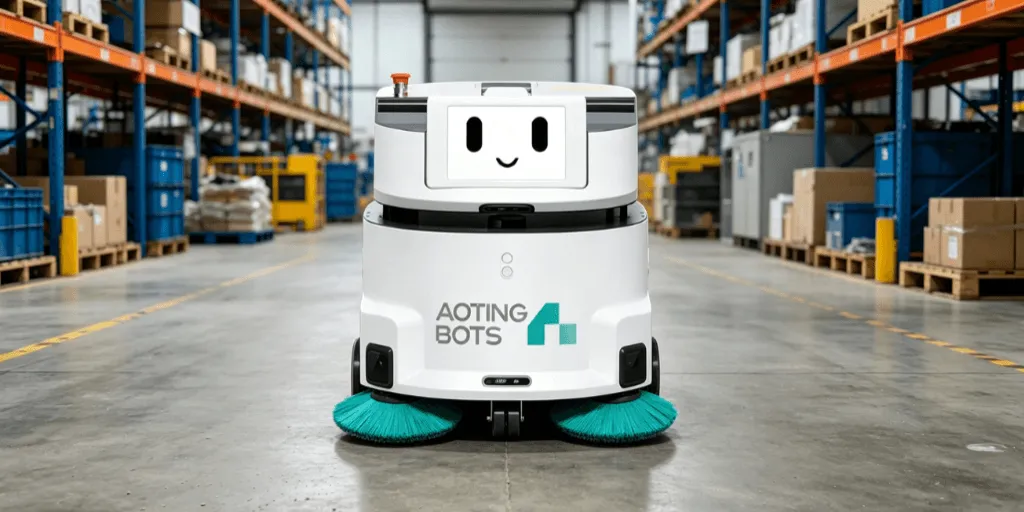
The primary driver of cost reduction is the dramatic increase in "active cleaning time." A human operator using a manual scrubber-dryer must take breaks, handle equipment setup, and may experience fatigue that slows productivity over an eight-hour shift. In contrast, an autonomous unit operates with consistent precision until its battery requires charging.
At Aoting, we designed our SW55-A autonomous scrubber-dryer to maximize this uptime. With a cleaning efficiency of up to 2,500 square meters per hour and a runtime of 4 to 5 hours on a single charge, our technology ensures that large floor areas are maintained without constant human supervision. When you calculate the cost per square meter, the autonomous approach consistently outperforms manual labor by eliminating the "idle time" associated with human management.
Furthermore, autonomous robots reduce the "indirect" costs of labor. These include the administrative burden of scheduling, the costs of workers' compensation insurance, and the expensive cycle of hiring and training new staff. When a robot is deployed, the "knowledge" of the cleaning route is stored in its software, not in a specific employee’s head. This ensures continuity of service even during staffing shortages.
To understand the financial impact, we must look at the direct performance metrics. Manual cleaning is often inconsistent. One worker may be thorough, while another may skip corners to finish a shift faster. This inconsistency leads to long-term flooring damage or hygiene failures, which create additional costs.
The following table illustrates the typical performance gap between traditional manual cleaning and the use of an autonomous system like our SW55-A.
By utilizing advanced SLAM (Simultaneous Localization and Mapping) technology and a suite of ultrasonic and laser sensors, our robots navigate complex environments without the need for a dedicated operator. This allows a single janitorial supervisor to manage a fleet of robots, effectively multiplying their productivity by five or ten times without increasing their workload.
The financial benefits of automation are most visible in high-traffic, large-scale environments. In these settings, the sheer volume of floor space makes manual cleaning prohibitively expensive.
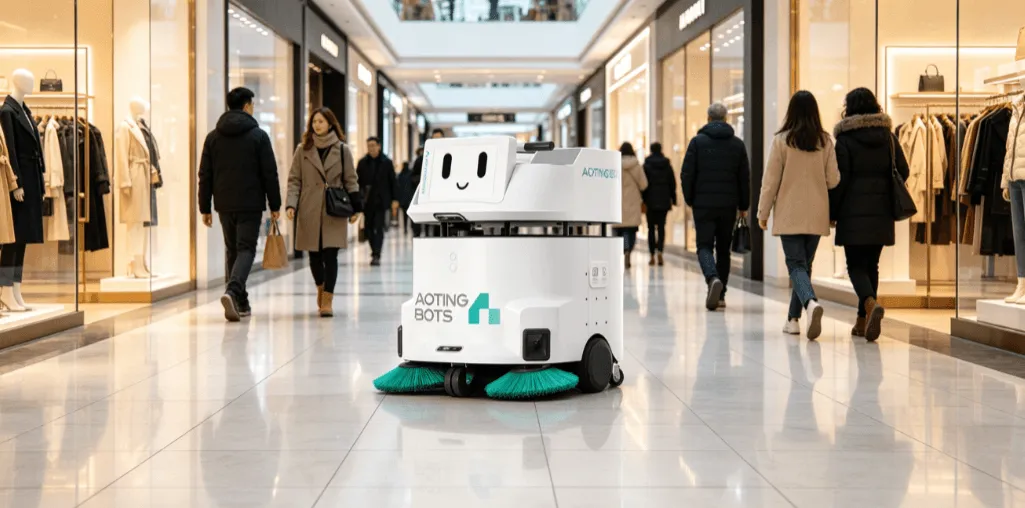
In logistics and warehousing, dust and debris accumulate rapidly. Using an autonomous scrubber like our SW55-A allows these facilities to maintain clean floors 24/7 without hiring an overnight cleaning crew. The robot can operate during "dark hours" when human activity is low, ensuring the facility is pristine for the morning shift.
In the healthcare and hospitality sectors, the focus is on hygiene and public safety. Autonomous robots provide a "provable" clean. Every square inch covered by the robot is logged in a digital report. This data-driven approach reduces the labor cost associated with quality control and auditing. Instead of a supervisor manually checking floors, they simply review a digital map of the completed work.
Experienced facility managers know that labor costs are more than just a paycheck. One of the most significant "hidden" costs is employee turnover. The janitorial industry often sees turnover rates exceeding 100% annually. The cost to recruit, vet, and train a single new cleaner can range from $1,000 to $3,000.
By deploying our cleaning robots, we help organizations break this cycle. The robot handles the "dull, dirty, and dangerous" work—the repetitive floor scrubbing that leads to employee burnout and physical strain. When workers are elevated to "robot supervisors," their job satisfaction often increases. This transition reduces turnover, which in turn slashes recruitment and training budgets.
Additionally, cleaning robots are more precise with consumables. Our systems are calibrated to use the exact amount of water and chemical solution required for the floor type. Human operators frequently over-pour chemicals, leading to wasted resources and potential chemical damage to floor finishes. Over a fiscal year, the savings on cleaning chemicals and water can contribute significantly to the overall ROI of the machine.
Investing in cleaning robot labor cost reduction is a strategic move to future-proof an organization against volatile labor markets. As minimum wages continue to rise globally, the "break-even" point for autonomous hardware becomes shorter. In many industrial applications, we see a full Return on Investment (ROI) within 12 to 18 months.
The integration of IoT and cloud reporting allows these machines to become part of a "Smart Building" ecosystem. We provide our users with real-time data on cleaning performance, water usage, and battery health. This transparency allows for predictive maintenance, preventing the costly downtime often associated with neglected manual equipment.
For companies looking to scale their operations, the ability to deploy a consistent cleaning standard across multiple sites without hiring hundreds of new staff is a massive competitive advantage. It allows for rapid growth while keeping overhead costs lean and manageable.
From an engineering perspective, the reliability of the sensors determines the true cost-saving potential. If a robot frequently gets stuck or requires human intervention, the labor savings disappear. This is why we prioritize high-grade sensor fusion in our products.
Our SW55-A utilizes a combination of Lidar, 3D cameras, and ultrasonic sensors to ensure it operates safely around people and moving equipment. This reduces the risk of accidents and the associated legal or insurance costs. When a machine can truly be "set and forgotten," the promise of labor reduction becomes a reality.
In conclusion, the shift toward autonomous cleaning is a shift toward operational maturity. By reclaiming thousands of labor hours per year and eliminating the variables of human error and turnover, facilities can achieve a higher standard of cleanliness at a fraction of the traditional cost.
How long does it take to see a return on investment (ROI) with a cleaning robot?
Most commercial facilities see a full ROI within 12 to 24 months, depending on local labor rates and the frequency of cleaning. In 24/7 environments like airports or hospitals, the payback period is often even shorter due to high labor displacement.
Can cleaning robots work safely in crowded environments?
Yes, modern autonomous scrubbers like our SW55-A are equipped with multi-modal sensor arrays including Lidar and ultrasonic sensors. These allow the robot to detect and avoid both static and moving obstacles in real-time, ensuring safety in public spaces.
Does an autonomous robot require a specialized technician to operate?
No, we design our interfaces for ease of use. After the initial mapping of the facility, a standard cleaning staff member can start a cleaning task with a few taps on a touchscreen. The goal is to empower existing staff, not replace them with engineers.
What happens to existing cleaning staff when a robot is introduced?
In most cases, staff are reallocated to higher-value tasks that require human dexterity, such as cleaning windows, disinfecting high-touch surfaces, or managing complex maintenance. This improves overall facility hygiene without increasing the headcount.
What kind of maintenance does a cleaning robot like the SW55-A require?
The daily maintenance is similar to a manual scrubber: emptying and rinsing the tanks, cleaning the squeegee and brushes, and charging the battery. Because the robot monitors its own systems, it can often alert users to maintenance needs before they become major repairs.
ISO 13482:2014 - Safety requirements for service robots
https://www.iso.org/standard/53820.html
International Federation of Robotics - Service Robot Stats
https://ifr.org/worldrobotics/
OSHA - Walking-Working Surfaces and Fall Protection
https://www.osha.gov/walking-working-surfaces
CleanLink - Janitorial Labor and Turnover Trends
https://www.cleanlink.com/
The global facility management industry is currently facing a dual challenge: rising wage demands and a persistent shortage of skilled janitorial staff. For warehouse managers, hospital administrators, and retail operators, the question is no longer whether to automate, but how quickly automation can stabilize operational budgets. Cleaning robot labor cost reduction is not merely about replacing a person with a machine; it is about fundamentally restructuring how labor hours are utilized within a commercial environment.
In traditional cleaning models, approximately 80% to 90% of the total budget is consumed by labor expenses. This includes wages, insurance, recruitment, and the ongoing costs of high turnover rates typical in the cleaning sector. By introducing autonomous solutions, we shift the financial burden from variable labor costs to a predictable capital expenditure model. This transition allows facility managers to allocate their human workers to high-value, detailed tasks that robots cannot yet perform, such as deep-cleaning touchpoints or managing specialized maintenance.
The primary driver of cost reduction is the dramatic increase in "active cleaning time." A human operator using a manual scrubber-dryer must take breaks, handle equipment setup, and may experience fatigue that slows productivity over an eight-hour shift. In contrast, an autonomous unit operates with consistent precision until its battery requires charging.
At Aoting, we designed our SW55-A autonomous scrubber-dryer to maximize this uptime. With a cleaning efficiency of up to 2,500 square meters per hour and a runtime of 4 to 5 hours on a single charge, our technology ensures that large floor areas are maintained without constant human supervision. When you calculate the cost per square meter, the autonomous approach consistently outperforms manual labor by eliminating the "idle time" associated with human management.
Furthermore, autonomous robots reduce the "indirect" costs of labor. These include the administrative burden of scheduling, the costs of workers' compensation insurance, and the expensive cycle of hiring and training new staff. When a robot is deployed, the "knowledge" of the cleaning route is stored in its software, not in a specific employee’s head. This ensures continuity of service even during staffing shortages.
To understand the financial impact, we must look at the direct performance metrics. Manual cleaning is often inconsistent. One worker may be thorough, while another may skip corners to finish a shift faster. This inconsistency leads to long-term flooring damage or hygiene failures, which create additional costs.
The following table illustrates the typical performance gap between traditional manual cleaning and the use of an autonomous system like our SW55-A.
By utilizing advanced SLAM (Simultaneous Localization and Mapping) technology and a suite of ultrasonic and laser sensors, our robots navigate complex environments without the need for a dedicated operator. This allows a single janitorial supervisor to manage a fleet of robots, effectively multiplying their productivity by five or ten times without increasing their workload.
The financial benefits of automation are most visible in high-traffic, large-scale environments. In these settings, the sheer volume of floor space makes manual cleaning prohibitively expensive.
In logistics and warehousing, dust and debris accumulate rapidly. Using an autonomous scrubber like our SW55-A allows these facilities to maintain clean floors 24/7 without hiring an overnight cleaning crew. The robot can operate during "dark hours" when human activity is low, ensuring the facility is pristine for the morning shift.
In the healthcare and hospitality sectors, the focus is on hygiene and public safety. Autonomous robots provide a "provable" clean. Every square inch covered by the robot is logged in a digital report. This data-driven approach reduces the labor cost associated with quality control and auditing. Instead of a supervisor manually checking floors, they simply review a digital map of the completed work.
Experienced facility managers know that labor costs are more than just a paycheck. One of the most significant "hidden" costs is employee turnover. The janitorial industry often sees turnover rates exceeding 100% annually. The cost to recruit, vet, and train a single new cleaner can range from $1,000 to $3,000.
By deploying our cleaning robots, we help organizations break this cycle. The robot handles the "dull, dirty, and dangerous" work—the repetitive floor scrubbing that leads to employee burnout and physical strain. When workers are elevated to "robot supervisors," their job satisfaction often increases. This transition reduces turnover, which in turn slashes recruitment and training budgets.
Additionally, cleaning robots are more precise with consumables. Our systems are calibrated to use the exact amount of water and chemical solution required for the floor type. Human operators frequently over-pour chemicals, leading to wasted resources and potential chemical damage to floor finishes. Over a fiscal year, the savings on cleaning chemicals and water can contribute significantly to the overall ROI of the machine.
Investing in cleaning robot labor cost reduction is a strategic move to future-proof an organization against volatile labor markets. As minimum wages continue to rise globally, the "break-even" point for autonomous hardware becomes shorter. In many industrial applications, we see a full Return on Investment (ROI) within 12 to 18 months.
The integration of IoT and cloud reporting allows these machines to become part of a "Smart Building" ecosystem. We provide our users with real-time data on cleaning performance, water usage, and battery health. This transparency allows for predictive maintenance, preventing the costly downtime often associated with neglected manual equipment.
For companies looking to scale their operations, the ability to deploy a consistent cleaning standard across multiple sites without hiring hundreds of new staff is a massive competitive advantage. It allows for rapid growth while keeping overhead costs lean and manageable.
From an engineering perspective, the reliability of the sensors determines the true cost-saving potential. If a robot frequently gets stuck or requires human intervention, the labor savings disappear. This is why we prioritize high-grade sensor fusion in our products.
Our SW55-A utilizes a combination of Lidar, 3D cameras, and ultrasonic sensors to ensure it operates safely around people and moving equipment. This reduces the risk of accidents and the associated legal or insurance costs. When a machine can truly be "set and forgotten," the promise of labor reduction becomes a reality.
In conclusion, the shift toward autonomous cleaning is a shift toward operational maturity. By reclaiming thousands of labor hours per year and eliminating the variables of human error and turnover, facilities can achieve a higher standard of cleanliness at a fraction of the traditional cost.
How long does it take to see a return on investment (ROI) with a cleaning robot?
Most commercial facilities see a full ROI within 12 to 24 months, depending on local labor rates and the frequency of cleaning. In 24/7 environments like airports or hospitals, the payback period is often even shorter due to high labor displacement.
Can cleaning robots work safely in crowded environments?
Yes, modern autonomous scrubbers like our SW55-A are equipped with multi-modal sensor arrays including Lidar and ultrasonic sensors. These allow the robot to detect and avoid both static and moving obstacles in real-time, ensuring safety in public spaces.
Does an autonomous robot require a specialized technician to operate?
No, we design our interfaces for ease of use. After the initial mapping of the facility, a standard cleaning staff member can start a cleaning task with a few taps on a touchscreen. The goal is to empower existing staff, not replace them with engineers.
What happens to existing cleaning staff when a robot is introduced?
In most cases, staff are reallocated to higher-value tasks that require human dexterity, such as cleaning windows, disinfecting high-touch surfaces, or managing complex maintenance. This improves overall facility hygiene without increasing the headcount.
What kind of maintenance does a cleaning robot like the SW55-A require?
The daily maintenance is similar to a manual scrubber: emptying and rinsing the tanks, cleaning the squeegee and brushes, and charging the battery. Because the robot monitors its own systems, it can often alert users to maintenance needs before they become major repairs.
ISO 13482:2014 - Safety requirements for service robots
https://www.iso.org/standard/53820.html
International Federation of Robotics - Service Robot Stats
https://ifr.org/worldrobotics/
OSHA - Walking-Working Surfaces and Fall Protection
https://www.osha.gov/walking-working-surfaces
CleanLink - Janitorial Labor and Turnover Trends
https://www.cleanlink.com/
CONTACT US
we aim to become a global leader in manufacturer space service robotics and artificial intelligence.


