
CONTACT US
SEARCH WHAT YOU WANT
The landscape of industrial automation is undergoing a significant transformation. Traditionally, robots in factories were confined to safety cages, performing repetitive assembly tasks or heavy lifting. Today, a new category known as service robots in manufacturing is emerging to handle non-production tasks that are vital for operational continuity.
These autonomous systems are designed to support the human workforce by managing the surrounding environment. While industrial robots focus on the product, service robots focus on the facility. This shift allows manufacturers to optimize workflows beyond the assembly line, targeting areas like internal logistics, facility inspection, and floor maintenance.
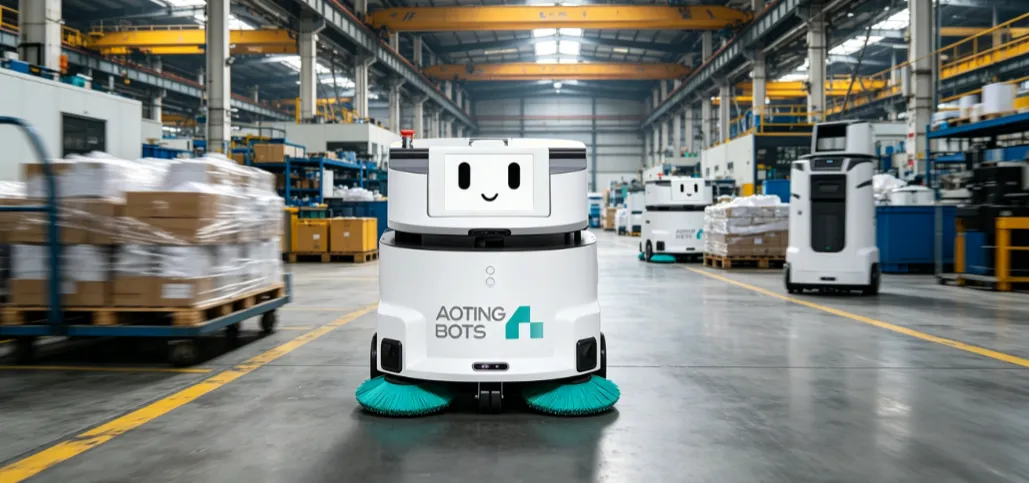
Service robots are semi or fully autonomous devices that perform useful tasks for humans or equipment, excluding industrial automation applications. In a manufacturing context, they operate in shared workspaces alongside employees. Unlike traditional CNC machines or robotic arms, these units are mobile and context-aware.
We categorize these robots by their ability to perceive dynamic environments. They use advanced navigation to move through crowded corridors without human intervention. This capability is essential in a factory where forklifts, pallets, and personnel are constantly in motion.
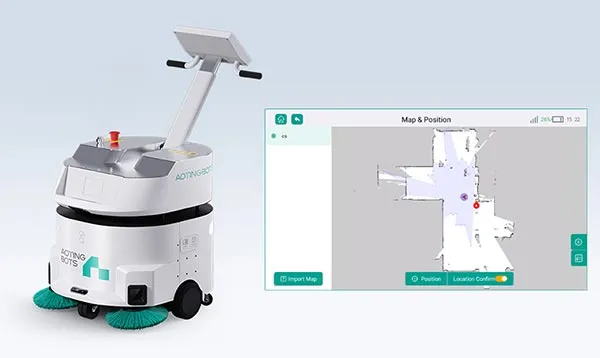
The effectiveness of service robots in manufacturing relies on their "brain" and "senses." Modern units utilize LiDAR (Light Detection and Ranging) and visual sensors to map their surroundings. This process, known as SLAM (Simultaneous Localization and Mapping), allows the robot to understand its position in real-time.
At Aotingbot, we integrate multi-sensor fusion into our platforms to ensure high reliability. For example, our SW55-A autonomous cleaning robot utilizes laser SLAM combined with 3D depth cameras. This ensures the robot can detect low-profile obstacles or transparent glass partitions that traditional sensors might miss.
These technologies allow robots to recalculate paths instantly if a hallway is blocked. This level of intelligence is what differentiates a modern service robot from an older automated guided vehicle (AGV). AGVs require magnetic strips or wires, whereas our service robots navigate freely using digital maps.
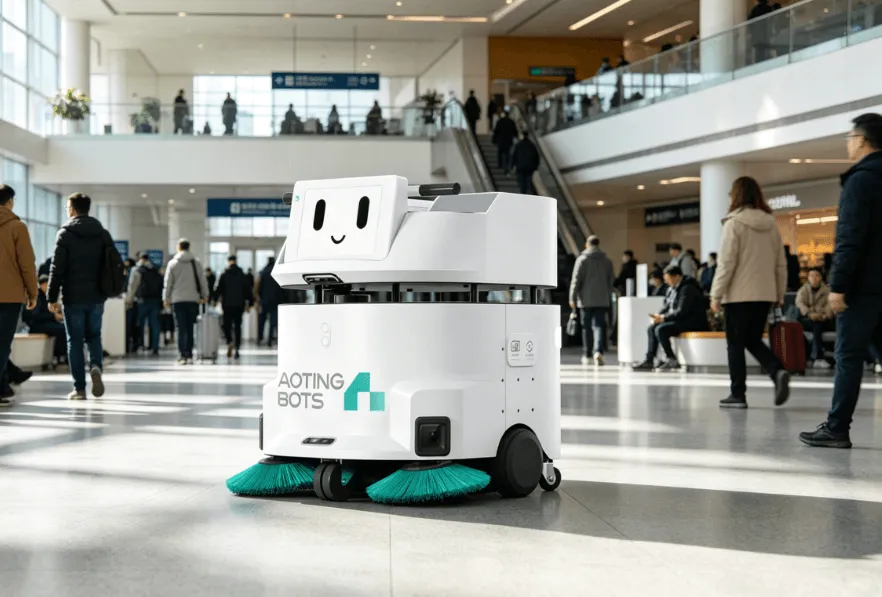
Service robots are versatile tools that address various operational bottlenecks. Their roles are expanding as manufacturers recognize the cost of manual facility management. By automating secondary tasks, plants can redirect skilled labor to high-value production roles.
Intralogistics and Material Transport: Moving raw materials or finished goods between workstations to reduce forklift traffic.
Facility Maintenance and Hygiene: Ensuring large floor areas remain clean and free of debris that could cause slips or equipment damage.
Safety and Security Patrols: Utilizing thermal cameras and gas sensors to detect leaks or unauthorized access during off-hours.
Environmental Monitoring: Tracking temperature, humidity, and air quality in sensitive electronics or pharmaceutical manufacturing zones.
Maintaining a clean floor is not just about aesthetics; it is a fundamental safety and compliance requirement. Dust, oil spills, and metal shavings can compromise the integrity of precision machinery. Manual cleaning in large-scale facilities is often inconsistent and labor-intensive.
We designed the SW55-A to address these specific industrial challenges. It is a specialized service robot that automates the entire floor scrubbing process. It doesn't just clean; it manages its own lifecycle by returning to a workstation for water refilling and battery charging.
In manufacturing environments with heavy foot traffic, consistent hygiene prevents the cross-contamination of products. By deploying autonomous scrubbers, facilities can ensure 24/7 cleanliness without increasing payroll costs. This is particularly vital for ISO-certified plants where environmental control is strictly audited.
Integrating service robots into a manufacturing workflow provides measurable improvements in organizational health. The most immediate impact is the reduction in human exposure to dull, dirty, or dangerous tasks. This leads to higher employee retention and lower workplace injury rates.
Furthermore, these robots provide data-driven insights that manual processes cannot. A robot can report exactly how many square meters were cleaned or how many kilometers of material were moved. This transparency allows plant managers to optimize schedules based on real-world usage patterns.
Efficiency is also gained through consistency. A service robot does not experience fatigue and maintains the same level of performance at the end of a shift as it does at the beginning. This predictability is a cornerstone of "Lean Manufacturing" principles, where variability is the enemy of productivity.
The next frontier for these robots involves deeper integration with the "Industrial Internet of Things" (IIoT). We anticipate that service robots will soon communicate directly with factory management systems (MES). For instance, a spill detected by a ceiling camera could automatically dispatch a cleaning robot to the site.
Artificial intelligence will also play a larger role in predictive maintenance. Instead of following a set schedule, robots will use sensors to identify which areas of the factory require attention. This transition from reactive to proactive service will further minimize downtime.
As a manufacturer of these advanced systems, we continue to refine the interaction between humans and machines. The goal is to create a seamless environment where service robots handle the "background" of the factory. This allows the human element of manufacturing to focus entirely on innovation and quality control.
What is the difference between an AMR and a service robot?
An AMR (Autonomous Mobile Robot) is a specific type of technology, whereas "service robot" is a functional category. Many service robots in manufacturing use AMR technology to navigate without floor markers.
Are service robots safe to use in crowded factories?
Yes, modern service robots are equipped with redundant safety systems including emergency stop buttons, LiDAR, and ultrasonic sensors. We design our robots to slow down or stop instantly when a human enters their immediate safety zone.
Can service robots operate on uneven industrial floors?
Most service robots are designed for indoor, flat industrial surfaces. However, high-quality models can handle minor gradients and small expansion joints commonly found in modern warehouses and manufacturing plants.
How long does it take to deploy a service robot in a factory?
Mapping and initial setup for a single unit can often be completed in a few hours. The robot drives through the facility to create a digital twin of the environment, after which it can begin autonomous operations immediately.
Do these robots require constant internet connectivity?
While many robots can perform their primary tasks offline using local maps, a connection is usually required for remote monitoring, fleet management, and receiving software updates.
International Federation of Robotics - Service Robot Definitions
https://ifr.org/service-robots
IEEE Spectrum - Robotics and Automation News and Trends
https://spectrum.ieee.org/robotics
ISO 13482:2014 - Safety requirements for service robots
https://www.iso.org/standard/53820.html
OSHA Guidelines on Robotics and Worker Safety
https://www.osha.gov/robotics
The landscape of industrial automation is undergoing a significant transformation. Traditionally, robots in factories were confined to safety cages, performing repetitive assembly tasks or heavy lifting. Today, a new category known as service robots in manufacturing is emerging to handle non-production tasks that are vital for operational continuity.
These autonomous systems are designed to support the human workforce by managing the surrounding environment. While industrial robots focus on the product, service robots focus on the facility. This shift allows manufacturers to optimize workflows beyond the assembly line, targeting areas like internal logistics, facility inspection, and floor maintenance.
Service robots are semi or fully autonomous devices that perform useful tasks for humans or equipment, excluding industrial automation applications. In a manufacturing context, they operate in shared workspaces alongside employees. Unlike traditional CNC machines or robotic arms, these units are mobile and context-aware.
We categorize these robots by their ability to perceive dynamic environments. They use advanced navigation to move through crowded corridors without human intervention. This capability is essential in a factory where forklifts, pallets, and personnel are constantly in motion.
The effectiveness of service robots in manufacturing relies on their "brain" and "senses." Modern units utilize LiDAR (Light Detection and Ranging) and visual sensors to map their surroundings. This process, known as SLAM (Simultaneous Localization and Mapping), allows the robot to understand its position in real-time.
At Aotingbot, we integrate multi-sensor fusion into our platforms to ensure high reliability. For example, our SW55-A autonomous cleaning robot utilizes laser SLAM combined with 3D depth cameras. This ensures the robot can detect low-profile obstacles or transparent glass partitions that traditional sensors might miss.
These technologies allow robots to recalculate paths instantly if a hallway is blocked. This level of intelligence is what differentiates a modern service robot from an older automated guided vehicle (AGV). AGVs require magnetic strips or wires, whereas our service robots navigate freely using digital maps.
Service robots are versatile tools that address various operational bottlenecks. Their roles are expanding as manufacturers recognize the cost of manual facility management. By automating secondary tasks, plants can redirect skilled labor to high-value production roles.
Intralogistics and Material Transport: Moving raw materials or finished goods between workstations to reduce forklift traffic.
Facility Maintenance and Hygiene: Ensuring large floor areas remain clean and free of debris that could cause slips or equipment damage.
Safety and Security Patrols: Utilizing thermal cameras and gas sensors to detect leaks or unauthorized access during off-hours.
Environmental Monitoring: Tracking temperature, humidity, and air quality in sensitive electronics or pharmaceutical manufacturing zones.
Maintaining a clean floor is not just about aesthetics; it is a fundamental safety and compliance requirement. Dust, oil spills, and metal shavings can compromise the integrity of precision machinery. Manual cleaning in large-scale facilities is often inconsistent and labor-intensive.
We designed the SW55-A to address these specific industrial challenges. It is a specialized service robot that automates the entire floor scrubbing process. It doesn't just clean; it manages its own lifecycle by returning to a workstation for water refilling and battery charging.
In manufacturing environments with heavy foot traffic, consistent hygiene prevents the cross-contamination of products. By deploying autonomous scrubbers, facilities can ensure 24/7 cleanliness without increasing payroll costs. This is particularly vital for ISO-certified plants where environmental control is strictly audited.
Integrating service robots into a manufacturing workflow provides measurable improvements in organizational health. The most immediate impact is the reduction in human exposure to dull, dirty, or dangerous tasks. This leads to higher employee retention and lower workplace injury rates.
Furthermore, these robots provide data-driven insights that manual processes cannot. A robot can report exactly how many square meters were cleaned or how many kilometers of material were moved. This transparency allows plant managers to optimize schedules based on real-world usage patterns.
Efficiency is also gained through consistency. A service robot does not experience fatigue and maintains the same level of performance at the end of a shift as it does at the beginning. This predictability is a cornerstone of "Lean Manufacturing" principles, where variability is the enemy of productivity.
The next frontier for these robots involves deeper integration with the "Industrial Internet of Things" (IIoT). We anticipate that service robots will soon communicate directly with factory management systems (MES). For instance, a spill detected by a ceiling camera could automatically dispatch a cleaning robot to the site.
Artificial intelligence will also play a larger role in predictive maintenance. Instead of following a set schedule, robots will use sensors to identify which areas of the factory require attention. This transition from reactive to proactive service will further minimize downtime.
As a manufacturer of these advanced systems, we continue to refine the interaction between humans and machines. The goal is to create a seamless environment where service robots handle the "background" of the factory. This allows the human element of manufacturing to focus entirely on innovation and quality control.
What is the difference between an AMR and a service robot?
An AMR (Autonomous Mobile Robot) is a specific type of technology, whereas "service robot" is a functional category. Many service robots in manufacturing use AMR technology to navigate without floor markers.
Are service robots safe to use in crowded factories?
Yes, modern service robots are equipped with redundant safety systems including emergency stop buttons, LiDAR, and ultrasonic sensors. We design our robots to slow down or stop instantly when a human enters their immediate safety zone.
Can service robots operate on uneven industrial floors?
Most service robots are designed for indoor, flat industrial surfaces. However, high-quality models can handle minor gradients and small expansion joints commonly found in modern warehouses and manufacturing plants.
How long does it take to deploy a service robot in a factory?
Mapping and initial setup for a single unit can often be completed in a few hours. The robot drives through the facility to create a digital twin of the environment, after which it can begin autonomous operations immediately.
Do these robots require constant internet connectivity?
While many robots can perform their primary tasks offline using local maps, a connection is usually required for remote monitoring, fleet management, and receiving software updates.
International Federation of Robotics - Service Robot Definitions
https://ifr.org/service-robots
IEEE Spectrum - Robotics and Automation News and Trends
https://spectrum.ieee.org/robotics
ISO 13482:2014 - Safety requirements for service robots
https://www.iso.org/standard/53820.html
OSHA Guidelines on Robotics and Worker Safety
https://www.osha.gov/robotics
CONTACT US
we aim to become a global leader in manufacturer space service robotics and artificial intelligence.


