
CONTACT US
SEARCH WHAT YOU WANT
In the rapidly evolving landscape of industrial automation, the term "dry cleaning technology" refers to specialized robotic systems designed to remove particulate matter—such as dust, debris, and fine allergens—without the use of water or chemical solvents. Unlike domestic vacuum cleaners, a professional-grade dry cleaning robot is engineered for high-duty cycles, complex navigation, and environmental air quality management. As we develop these autonomous solutions, our focus remains on replacing labor-intensive sweeping and vacuuming with precise, data-driven maintenance.
A dry cleaning robot is an autonomous mobile platform equipped with mechanical sweeping brushes, high-torque vacuum motors, and advanced filtration systems. Its primary objective is the "dry" removal of surface contaminants. In our engineering of the SW55-A, we prioritize a dual-function approach where side brushes direct debris toward a central rolling brush, which then lifts the material into a high-capacity hopper while a vacuum system captures airborne particulates.
In industrial and commercial contexts, these robots are not merely "robotic vacuums." They are sophisticated pieces of machinery designed to operate in environments ranging from 1,000 to 10,000 square meters. The technology must account for varying floor types, including epoxy resin, polished concrete, and low-pile industrial carpets, ensuring that the friction coefficient of the floor remains consistent after cleaning to prevent slip-and-fall hazards.
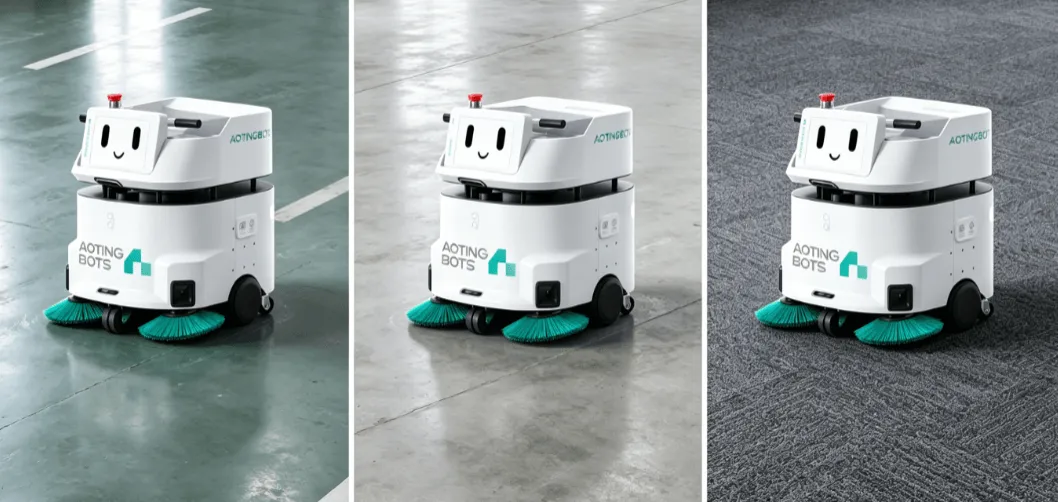
The effectiveness of a dry cleaning robot depends on three interlocking systems: the mechanical agitation system, the suction airflow, and the filtration logic. To understand how these robots maintain large-scale facilities, we must look at the specific mechanical workflows involved.
The first stage is agitation. Counter-rotating side brushes extend the robot’s cleaning path beyond its physical chassis, allowing it to pull dust away from wall edges and pallet racks. The second stage is the main brush roll, which acts as a mechanical lift. This brush must have the correct bristle density to flick heavier debris into the internal bin without scratching sensitive floor coatings.
Navigation is the "brain" of dry cleaning technology. Without high-precision mapping, a robot would leave patches of dust or collide with dynamic obstacles like forklifts or pedestrians. Most professional systems today utilize LiDAR (Light Detection and Ranging) coupled with SLAM (Simultaneous Localization and Mapping).
In our development of autonomous sweepers, we employ high-frequency LiDAR scanners that create a 360-degree point cloud of the environment. This allows the robot to calculate the most efficient path, minimizing overlap and ensuring 99% floor coverage. In high-traffic zones, the robot uses ultrasonic sensors and 3D depth cameras to detect "blind spots" or transparent obstacles like glass partitions. This level of situational awareness is what separates a professional dry cleaning robot from a consumer-grade toy.

One of the most overlooked aspects of dry cleaning technology is its impact on indoor air quality (IAQ). When a robot sweeps a floor, it naturally agitates dust. If the filtration system is inadequate, the robot essentially becomes a "dust spreader," exhausting fine particulates back into the air.
To prevent this, industrial dry cleaning robots must utilize HEPA (High-Efficiency Particulate Air) filters. These filters are rated to trap 99.97% of particles as small as 0.3 microns. In our SW55-A design, the air is pulled through a multi-stage filtration process. Large debris settles in the bin, while fine dust is trapped by the HEPA membrane before the air is exhausted. This is critical for environments like hospitals, data centers, and electronics manufacturing facilities where dust accumulation can cause hardware failure or health issues.
Dry cleaning technology is preferred over wet mopping in several key scenarios where moisture is either a safety risk or a material hazard. We see the highest adoption in sectors where floor integrity and rapid turnaround are priorities.
Logistics and Warehousing: Large concrete floors accumulate tire dust and wood splinters. Dry cleaning robots can operate 24/7 without leaving wet spots that might cause forklifts to skid.
Commercial Retail: In malls and supermarkets, maintaining a dust-free appearance is essential for brand image. Robots like our SW55-A can navigate around shoppers, providing a constant level of cleanliness.
Manufacturing Facilities: In automotive or electronics plants, oil-free dry sweeping is often required to maintain cleanroom standards or prevent chemical reactions between water and raw materials.
Educational and Healthcare Institutions: These environments require low-noise operation. Modern dry cleaning robots are engineered with sound-dampening vacuum chambers to operate during business hours.
For a dry cleaning robot to provide a return on investment, it must be built for "maintainability." In our experience as manufacturers, we focus on modular components. Brushes, filters, and batteries are the primary consumables. A well-designed robot allows a facility manager to swap a main roller brush in under two minutes without specialized tools.
Durability also involves the robot's ability to self-manage. When the battery level drops or the dust bin reaches capacity, the system should autonomously return to a docking station. This "lights-out" operation capability is the ultimate goal of dry cleaning technology in robotics, allowing human staff to focus on more complex deep-cleaning tasks while the robot maintains the "baseline" cleanliness of the facility.
While many facilities are moving toward "all-in-one" scrubbers, dry cleaning remains the essential first step in any floor care program. Applying water to a dusty floor creates mud, which can clog drainage systems and streak surfaces. By implementing a dedicated dry cleaning robot, facility managers ensure that the bulk of particulate matter is removed efficiently.
We have designed our autonomous solutions to bridge the gap between traditional manual labor and the future of smart buildings. By focusing on high-suction performance and reliable navigation, we provide a tool that doesn't just clean—it manages the environment.
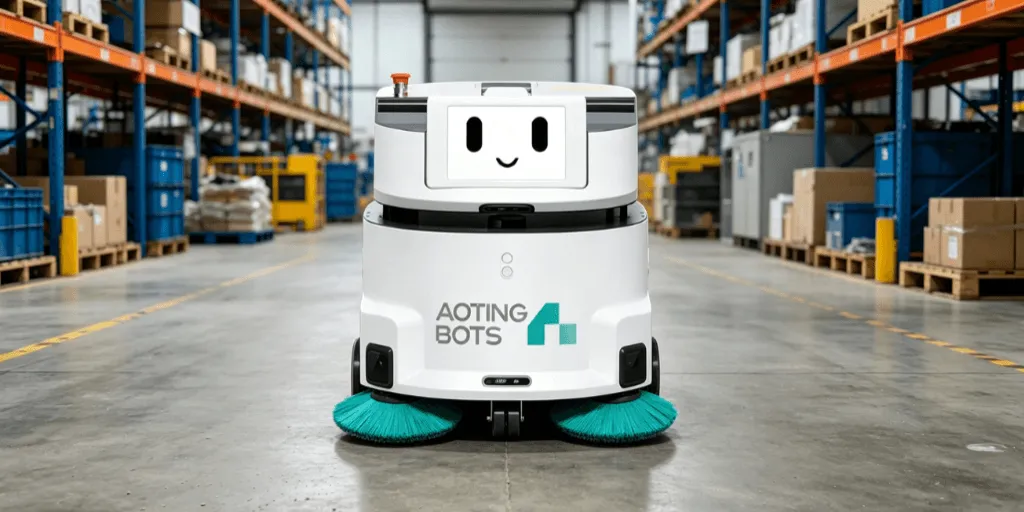
What is the difference between a robotic sweeper and a robotic vacuum?
A robotic sweeper typically uses larger mechanical brushes to move heavy debris into a bin, whereas a robotic vacuum relies primarily on high-velocity airflow (suction) to lift fine dust. Many industrial units, like the SW55-A, combine both technologies for maximum efficiency.
How often do filters need to be changed in a dry cleaning robot?
In standard commercial environments, HEPA filters should be inspected weekly and typically replaced every 3 to 6 months. However, in high-dust industrial settings like warehouses, more frequent intervals may be necessary to maintain suction performance.
Can dry cleaning robots operate on uneven surfaces?
Most professional dry cleaning robots are designed for indoor flat surfaces but can handle minor gradients (typically up to 6-10 degrees) and small thresholds. The suspension system in the drive wheels helps maintain brush contact on slightly uneven floors.
Are dry cleaning robots safe for use around people?
Yes, industrial robots use a combination of LiDAR, 3D cameras, and "bump" sensors to detect obstacles. If a person walks in front of the robot, the system’s SLAM algorithm recalculates the path or stops the robot instantly to avoid contact.
Can these robots handle wet spills?
No, dry cleaning robots are specifically designed for dry debris. Ingesting liquids can damage the vacuum motor and clog the HEPA filtration system. For wet environments, a dedicated robotic floor scrubber is required.
IEEE Xplore - Research on Autonomous Mobile Robots and SLAM
https://ieeexplore.ieee.org/
International Organization for Standardization - ISO 13482:2014 Robots and Robotic Devices
https://www.iso.org/standard/53820.html
Cleaning Management Institute (CMI) - Technical Standards for Commercial Cleaning
https://www.issa.com/certification-standards/cleaning-management-institute
In the rapidly evolving landscape of industrial automation, the term "dry cleaning technology" refers to specialized robotic systems designed to remove particulate matter—such as dust, debris, and fine allergens—without the use of water or chemical solvents. Unlike domestic vacuum cleaners, a professional-grade dry cleaning robot is engineered for high-duty cycles, complex navigation, and environmental air quality management. As we develop these autonomous solutions, our focus remains on replacing labor-intensive sweeping and vacuuming with precise, data-driven maintenance.
A dry cleaning robot is an autonomous mobile platform equipped with mechanical sweeping brushes, high-torque vacuum motors, and advanced filtration systems. Its primary objective is the "dry" removal of surface contaminants. In our engineering of the SW55-A, we prioritize a dual-function approach where side brushes direct debris toward a central rolling brush, which then lifts the material into a high-capacity hopper while a vacuum system captures airborne particulates.
In industrial and commercial contexts, these robots are not merely "robotic vacuums." They are sophisticated pieces of machinery designed to operate in environments ranging from 1,000 to 10,000 square meters. The technology must account for varying floor types, including epoxy resin, polished concrete, and low-pile industrial carpets, ensuring that the friction coefficient of the floor remains consistent after cleaning to prevent slip-and-fall hazards.
The effectiveness of a dry cleaning robot depends on three interlocking systems: the mechanical agitation system, the suction airflow, and the filtration logic. To understand how these robots maintain large-scale facilities, we must look at the specific mechanical workflows involved.
The first stage is agitation. Counter-rotating side brushes extend the robot’s cleaning path beyond its physical chassis, allowing it to pull dust away from wall edges and pallet racks. The second stage is the main brush roll, which acts as a mechanical lift. This brush must have the correct bristle density to flick heavier debris into the internal bin without scratching sensitive floor coatings.
Navigation is the "brain" of dry cleaning technology. Without high-precision mapping, a robot would leave patches of dust or collide with dynamic obstacles like forklifts or pedestrians. Most professional systems today utilize LiDAR (Light Detection and Ranging) coupled with SLAM (Simultaneous Localization and Mapping).
In our development of autonomous sweepers, we employ high-frequency LiDAR scanners that create a 360-degree point cloud of the environment. This allows the robot to calculate the most efficient path, minimizing overlap and ensuring 99% floor coverage. In high-traffic zones, the robot uses ultrasonic sensors and 3D depth cameras to detect "blind spots" or transparent obstacles like glass partitions. This level of situational awareness is what separates a professional dry cleaning robot from a consumer-grade toy.
One of the most overlooked aspects of dry cleaning technology is its impact on indoor air quality (IAQ). When a robot sweeps a floor, it naturally agitates dust. If the filtration system is inadequate, the robot essentially becomes a "dust spreader," exhausting fine particulates back into the air.
To prevent this, industrial dry cleaning robots must utilize HEPA (High-Efficiency Particulate Air) filters. These filters are rated to trap 99.97% of particles as small as 0.3 microns. In our SW55-A design, the air is pulled through a multi-stage filtration process. Large debris settles in the bin, while fine dust is trapped by the HEPA membrane before the air is exhausted. This is critical for environments like hospitals, data centers, and electronics manufacturing facilities where dust accumulation can cause hardware failure or health issues.
Dry cleaning technology is preferred over wet mopping in several key scenarios where moisture is either a safety risk or a material hazard. We see the highest adoption in sectors where floor integrity and rapid turnaround are priorities.
Logistics and Warehousing: Large concrete floors accumulate tire dust and wood splinters. Dry cleaning robots can operate 24/7 without leaving wet spots that might cause forklifts to skid.
Commercial Retail: In malls and supermarkets, maintaining a dust-free appearance is essential for brand image. Robots like our SW55-A can navigate around shoppers, providing a constant level of cleanliness.
Manufacturing Facilities: In automotive or electronics plants, oil-free dry sweeping is often required to maintain cleanroom standards or prevent chemical reactions between water and raw materials.
Educational and Healthcare Institutions: These environments require low-noise operation. Modern dry cleaning robots are engineered with sound-dampening vacuum chambers to operate during business hours.
For a dry cleaning robot to provide a return on investment, it must be built for "maintainability." In our experience as manufacturers, we focus on modular components. Brushes, filters, and batteries are the primary consumables. A well-designed robot allows a facility manager to swap a main roller brush in under two minutes without specialized tools.
Durability also involves the robot's ability to self-manage. When the battery level drops or the dust bin reaches capacity, the system should autonomously return to a docking station. This "lights-out" operation capability is the ultimate goal of dry cleaning technology in robotics, allowing human staff to focus on more complex deep-cleaning tasks while the robot maintains the "baseline" cleanliness of the facility.
While many facilities are moving toward "all-in-one" scrubbers, dry cleaning remains the essential first step in any floor care program. Applying water to a dusty floor creates mud, which can clog drainage systems and streak surfaces. By implementing a dedicated dry cleaning robot, facility managers ensure that the bulk of particulate matter is removed efficiently.
We have designed our autonomous solutions to bridge the gap between traditional manual labor and the future of smart buildings. By focusing on high-suction performance and reliable navigation, we provide a tool that doesn't just clean—it manages the environment.
What is the difference between a robotic sweeper and a robotic vacuum?
A robotic sweeper typically uses larger mechanical brushes to move heavy debris into a bin, whereas a robotic vacuum relies primarily on high-velocity airflow (suction) to lift fine dust. Many industrial units, like the SW55-A, combine both technologies for maximum efficiency.
How often do filters need to be changed in a dry cleaning robot?
In standard commercial environments, HEPA filters should be inspected weekly and typically replaced every 3 to 6 months. However, in high-dust industrial settings like warehouses, more frequent intervals may be necessary to maintain suction performance.
Can dry cleaning robots operate on uneven surfaces?
Most professional dry cleaning robots are designed for indoor flat surfaces but can handle minor gradients (typically up to 6-10 degrees) and small thresholds. The suspension system in the drive wheels helps maintain brush contact on slightly uneven floors.
Are dry cleaning robots safe for use around people?
Yes, industrial robots use a combination of LiDAR, 3D cameras, and "bump" sensors to detect obstacles. If a person walks in front of the robot, the system’s SLAM algorithm recalculates the path or stops the robot instantly to avoid contact.
Can these robots handle wet spills?
No, dry cleaning robots are specifically designed for dry debris. Ingesting liquids can damage the vacuum motor and clog the HEPA filtration system. For wet environments, a dedicated robotic floor scrubber is required.
IEEE Xplore - Research on Autonomous Mobile Robots and SLAM
https://ieeexplore.ieee.org/
International Organization for Standardization - ISO 13482:2014 Robots and Robotic Devices
https://www.iso.org/standard/53820.html
Cleaning Management Institute (CMI) - Technical Standards for Commercial Cleaning
https://www.issa.com/certification-standards/cleaning-management-institute
CONTACT US
we aim to become a global leader in manufacturer space service robotics and artificial intelligence.


