
CONTACT US
SEARCH WHAT YOU WANT
Modern industrial environments are undergoing a massive transformation in facility management. For decades, floor maintenance was a manual, labor-intensive task that often lagged behind the high-tech precision of the production line. Today, the integration of the factory robot cleaner into daily operations is no longer a luxury but a strategic necessity. As global manufacturing faces rising labor costs and stricter safety regulations, autonomous solutions provide the consistency that human crews often struggle to maintain in 24/7 operations.
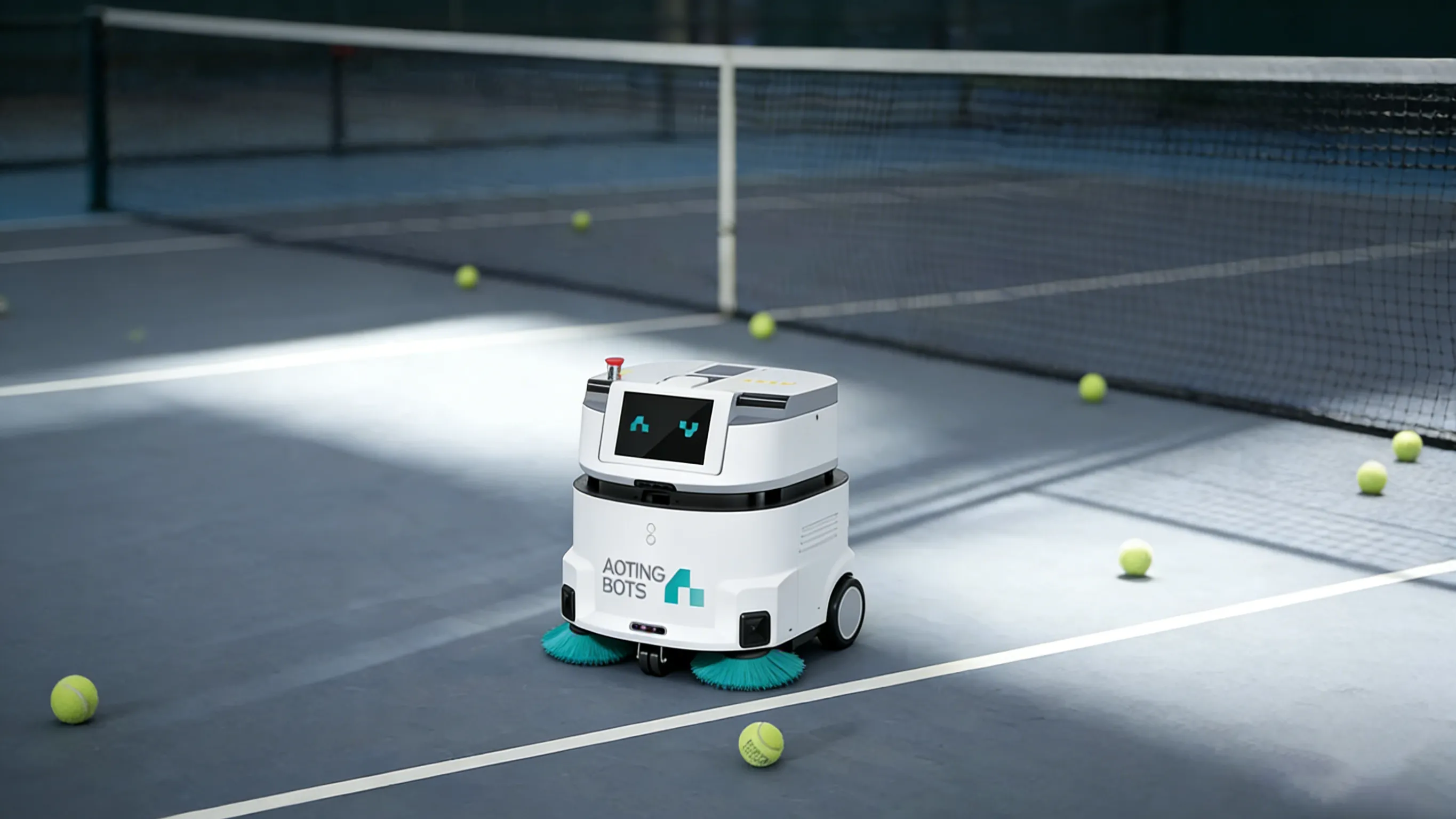
The primary driver behind this shift is the pursuit of operational consistency. In a large-scale facility, manual cleaning results often vary based on the operator's fatigue or shift timing. An autonomous factory robot cleaner eliminates this variability by following precise digital maps and standardized cleaning cycles.
Labor shortages in the facility management sector have also accelerated adoption. Many plant managers find it increasingly difficult to hire and retain staff for repetitive, physically demanding cleaning roles. By delegating floor scrubbing to specialized robots, facilities can reallocate human labor to higher-value technical tasks or more complex sanitation requirements that require human judgment.
Safety standards under organizations like OSHA have become more stringent regarding slip-and-fall hazards. Traditional mopping often leaves floors wet for extended periods, creating risks in high-traffic zones. Modern robotic scrubbers use advanced squeegee systems and vacuum motors to ensure floors are dry almost immediately after the brush pass.
Industrial floors are rarely clear, open spaces. They are filled with moving forklifts, temporary pallet storage, and personnel. To navigate these hazards, advanced robots utilize a combination of sensors known as "sensor fusion." This typically includes LiDAR for long-range mapping, 3D cameras for depth perception, and ultrasonic sensors to detect glass or dark objects.
At Aoting, we designed the SW55-A specifically to handle these dynamic environments. Our system employs a sophisticated SLAM (Simultaneous Localization and Mapping) algorithm that allows the unit to adapt to changes in the factory layout in real-time. If a new pallet is placed in its path, the robot recalculates a detour without human intervention.
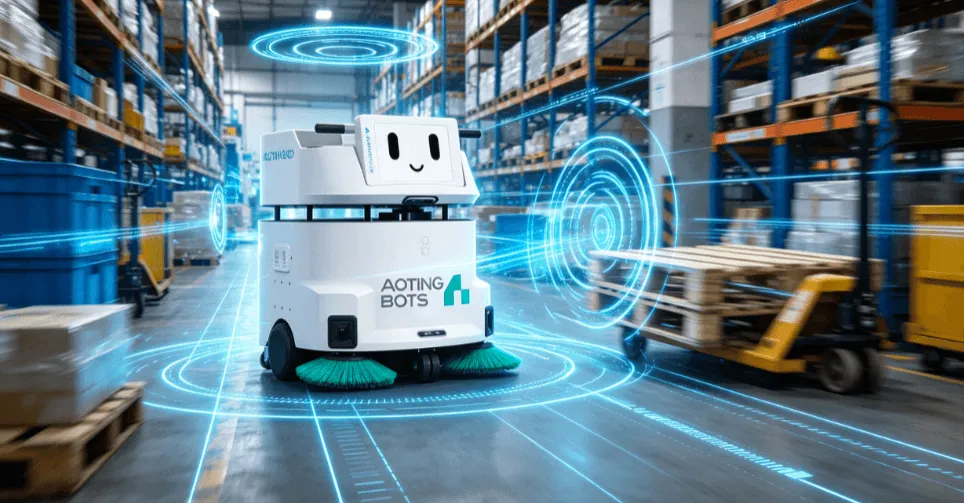
The cleaning mechanism itself is engineered for industrial-grade debris. Unlike domestic vacuums, a factory robot cleaner uses high-pressure cylindrical or disc brushes. These are capable of lifting fine dust, metallic shavings, and oil residues from porous concrete or epoxy-coated surfaces.
Safety in a factory is not just about avoiding collisions; it is about environmental control. Dust accumulation in electronics manufacturing or automotive paint shops can lead to high defect rates. Regular, automated cleaning cycles significantly reduce airborne particulates.
We have integrated multi-layer safety protocols into our hardware. This includes physical bumper strips for emergency stops and redundant "cliff sensors" to prevent the robot from falling down loading docks or stairs. These features ensure that the robot can operate safely alongside human workers during active production hours.
When evaluating a factory robot cleaner, engineers look at tank capacity, battery chemistry, and brush pressure. In our SW55-A model, we prioritized endurance and capacity for large-scale operations.
Water Capacity: A 40L clean water tank and a 50L recovery tank minimize the frequency of "pit stops."
Power System: Lithium iron phosphate (LiFePO4) batteries provide high thermal stability and long cycle life, essential for the heat of a factory floor.
Filtration: Multi-stage filtration prevents the spray nozzles from clogging with fine industrial silt.
Navigation: Vision-based obstacle avoidance combined with 360-degree LiDAR coverage.
These specifications ensure the robot can cover significant square footage before needing to return to a workstation for charging or water exchange.
Modern manufacturing relies on the "Industry 4.0" philosophy, where every machine is a data point. Traditional cleaning provides no data. An autonomous factory robot cleaner, however, provides comprehensive digital logs. Plant managers can see exactly which areas were cleaned, the duration of the cycle, and any areas that were inaccessible due to obstructions.
This transparency allows for "Cleaning-on-Demand." Instead of cleaning the entire plant every day, data might show that the shipping bay requires three cycles per day while the secondary warehouse only needs one. This optimization saves water, chemicals, and energy, contributing to corporate sustainability goals.
The integration of these robots also reduces the chemical footprint. Automated systems like the Aoting SW55-A use precise chemical dosing systems. This prevents the "over-pouring" common in manual mixing, which protects the longevity of expensive epoxy floor coatings and reduces chemical runoff.
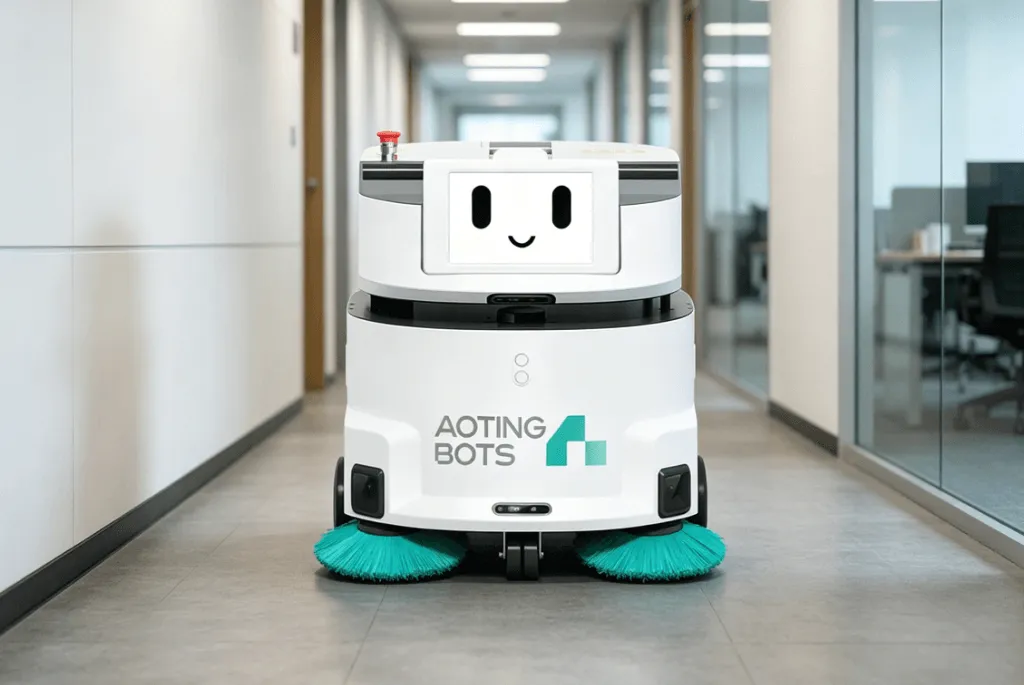
Adopting a factory robot cleaner is a foundational step in digitizing facility operations. As AI and machine learning continue to evolve, these robots will become even more adept at recognizing specific types of spills or debris and adjusting their cleaning mode automatically.
For many OEMs and facility managers, the ROI is realized within 12 to 18 months through labor savings and reduced maintenance costs. Beyond the financials, the improvement in workplace hygiene and the reduction in workplace accidents provide long-term value that is difficult to quantify but essential for modern industrial competitiveness.
Can a factory robot cleaner work on uneven industrial floors?
Most industrial robots are designed for flat surfaces like polished concrete or epoxy, but high-quality models like our SW55-A feature suspension systems that can handle minor gradients and expansion joints common in large plants.
How does the robot handle liquid spills versus dry dust?
The system uses a dual-action approach where the brushes scrub the surface with a cleaning solution while a high-powered vacuum and squeegee immediately lift the slurry, leaving the floor dry and free of both dust and liquids.
What happens if the robot gets stuck or encounters an error?
Our robots are equipped with cloud-based monitoring. If an anomaly occurs, the system sends an instant notification to the facility manager’s mobile device or computer, detailing the exact location and the nature of the obstruction.
Is specialized training required for factory staff to operate the robot?
No, modern interfaces are designed for the existing workforce. After the initial mapping by a technician, daily operation usually involves a simple "Start" command on a touchscreen or a pre-programmed schedule.
How long does the battery last in a high-demand factory setting?
A professional-grade factory robot cleaner typically offers 3 to 5 hours of continuous runtime. When the battery reaches a low threshold, units like the SW55-A can be programmed to return automatically to a charging station.
Occupational Safety and Health Administration (OSHA) - Walking-Working Surfaces Standards
https://www.osha.gov/laws-regs/regulations/standardnumber/1910
International Federation of Robotics (IFR) - Service Robots World Robotics Report
https://ifr.org/worldrobotics/
ISO 13482:2014 - Robots and robotic devices — Safety requirements for personal care robots
https://www.iso.org/standard/53820.html
ASTM International - Standard Guide for Evaluating Performance of Cleaning Robots
https://www.astm.org/standards/f3244
Modern industrial environments are undergoing a massive transformation in facility management. For decades, floor maintenance was a manual, labor-intensive task that often lagged behind the high-tech precision of the production line. Today, the integration of the factory robot cleaner into daily operations is no longer a luxury but a strategic necessity. As global manufacturing faces rising labor costs and stricter safety regulations, autonomous solutions provide the consistency that human crews often struggle to maintain in 24/7 operations.
The primary driver behind this shift is the pursuit of operational consistency. In a large-scale facility, manual cleaning results often vary based on the operator's fatigue or shift timing. An autonomous factory robot cleaner eliminates this variability by following precise digital maps and standardized cleaning cycles.
Labor shortages in the facility management sector have also accelerated adoption. Many plant managers find it increasingly difficult to hire and retain staff for repetitive, physically demanding cleaning roles. By delegating floor scrubbing to specialized robots, facilities can reallocate human labor to higher-value technical tasks or more complex sanitation requirements that require human judgment.
Safety standards under organizations like OSHA have become more stringent regarding slip-and-fall hazards. Traditional mopping often leaves floors wet for extended periods, creating risks in high-traffic zones. Modern robotic scrubbers use advanced squeegee systems and vacuum motors to ensure floors are dry almost immediately after the brush pass.
Industrial floors are rarely clear, open spaces. They are filled with moving forklifts, temporary pallet storage, and personnel. To navigate these hazards, advanced robots utilize a combination of sensors known as "sensor fusion." This typically includes LiDAR for long-range mapping, 3D cameras for depth perception, and ultrasonic sensors to detect glass or dark objects.
At Aoting, we designed the SW55-A specifically to handle these dynamic environments. Our system employs a sophisticated SLAM (Simultaneous Localization and Mapping) algorithm that allows the unit to adapt to changes in the factory layout in real-time. If a new pallet is placed in its path, the robot recalculates a detour without human intervention.
The cleaning mechanism itself is engineered for industrial-grade debris. Unlike domestic vacuums, a factory robot cleaner uses high-pressure cylindrical or disc brushes. These are capable of lifting fine dust, metallic shavings, and oil residues from porous concrete or epoxy-coated surfaces.
Safety in a factory is not just about avoiding collisions; it is about environmental control. Dust accumulation in electronics manufacturing or automotive paint shops can lead to high defect rates. Regular, automated cleaning cycles significantly reduce airborne particulates.
We have integrated multi-layer safety protocols into our hardware. This includes physical bumper strips for emergency stops and redundant "cliff sensors" to prevent the robot from falling down loading docks or stairs. These features ensure that the robot can operate safely alongside human workers during active production hours.
When evaluating a factory robot cleaner, engineers look at tank capacity, battery chemistry, and brush pressure. In our SW55-A model, we prioritized endurance and capacity for large-scale operations.
Water Capacity: A 40L clean water tank and a 50L recovery tank minimize the frequency of "pit stops."
Power System: Lithium iron phosphate (LiFePO4) batteries provide high thermal stability and long cycle life, essential for the heat of a factory floor.
Filtration: Multi-stage filtration prevents the spray nozzles from clogging with fine industrial silt.
Navigation: Vision-based obstacle avoidance combined with 360-degree LiDAR coverage.
These specifications ensure the robot can cover significant square footage before needing to return to a workstation for charging or water exchange.
Modern manufacturing relies on the "Industry 4.0" philosophy, where every machine is a data point. Traditional cleaning provides no data. An autonomous factory robot cleaner, however, provides comprehensive digital logs. Plant managers can see exactly which areas were cleaned, the duration of the cycle, and any areas that were inaccessible due to obstructions.
This transparency allows for "Cleaning-on-Demand." Instead of cleaning the entire plant every day, data might show that the shipping bay requires three cycles per day while the secondary warehouse only needs one. This optimization saves water, chemicals, and energy, contributing to corporate sustainability goals.
The integration of these robots also reduces the chemical footprint. Automated systems like the Aoting SW55-A use precise chemical dosing systems. This prevents the "over-pouring" common in manual mixing, which protects the longevity of expensive epoxy floor coatings and reduces chemical runoff.
Adopting a factory robot cleaner is a foundational step in digitizing facility operations. As AI and machine learning continue to evolve, these robots will become even more adept at recognizing specific types of spills or debris and adjusting their cleaning mode automatically.
For many OEMs and facility managers, the ROI is realized within 12 to 18 months through labor savings and reduced maintenance costs. Beyond the financials, the improvement in workplace hygiene and the reduction in workplace accidents provide long-term value that is difficult to quantify but essential for modern industrial competitiveness.
Can a factory robot cleaner work on uneven industrial floors?
Most industrial robots are designed for flat surfaces like polished concrete or epoxy, but high-quality models like our SW55-A feature suspension systems that can handle minor gradients and expansion joints common in large plants.
How does the robot handle liquid spills versus dry dust?
The system uses a dual-action approach where the brushes scrub the surface with a cleaning solution while a high-powered vacuum and squeegee immediately lift the slurry, leaving the floor dry and free of both dust and liquids.
What happens if the robot gets stuck or encounters an error?
Our robots are equipped with cloud-based monitoring. If an anomaly occurs, the system sends an instant notification to the facility manager’s mobile device or computer, detailing the exact location and the nature of the obstruction.
Is specialized training required for factory staff to operate the robot?
No, modern interfaces are designed for the existing workforce. After the initial mapping by a technician, daily operation usually involves a simple "Start" command on a touchscreen or a pre-programmed schedule.
How long does the battery last in a high-demand factory setting?
A professional-grade factory robot cleaner typically offers 3 to 5 hours of continuous runtime. When the battery reaches a low threshold, units like the SW55-A can be programmed to return automatically to a charging station.
Occupational Safety and Health Administration (OSHA) - Walking-Working Surfaces Standards
https://www.osha.gov/laws-regs/regulations/standardnumber/1910
International Federation of Robotics (IFR) - Service Robots World Robotics Report
https://ifr.org/worldrobotics/
ISO 13482:2014 - Robots and robotic devices — Safety requirements for personal care robots
https://www.iso.org/standard/53820.html
ASTM International - Standard Guide for Evaluating Performance of Cleaning Robots
https://www.astm.org/standards/f3244
CONTACT US
we aim to become a global leader in manufacturer space service robotics and artificial intelligence.


